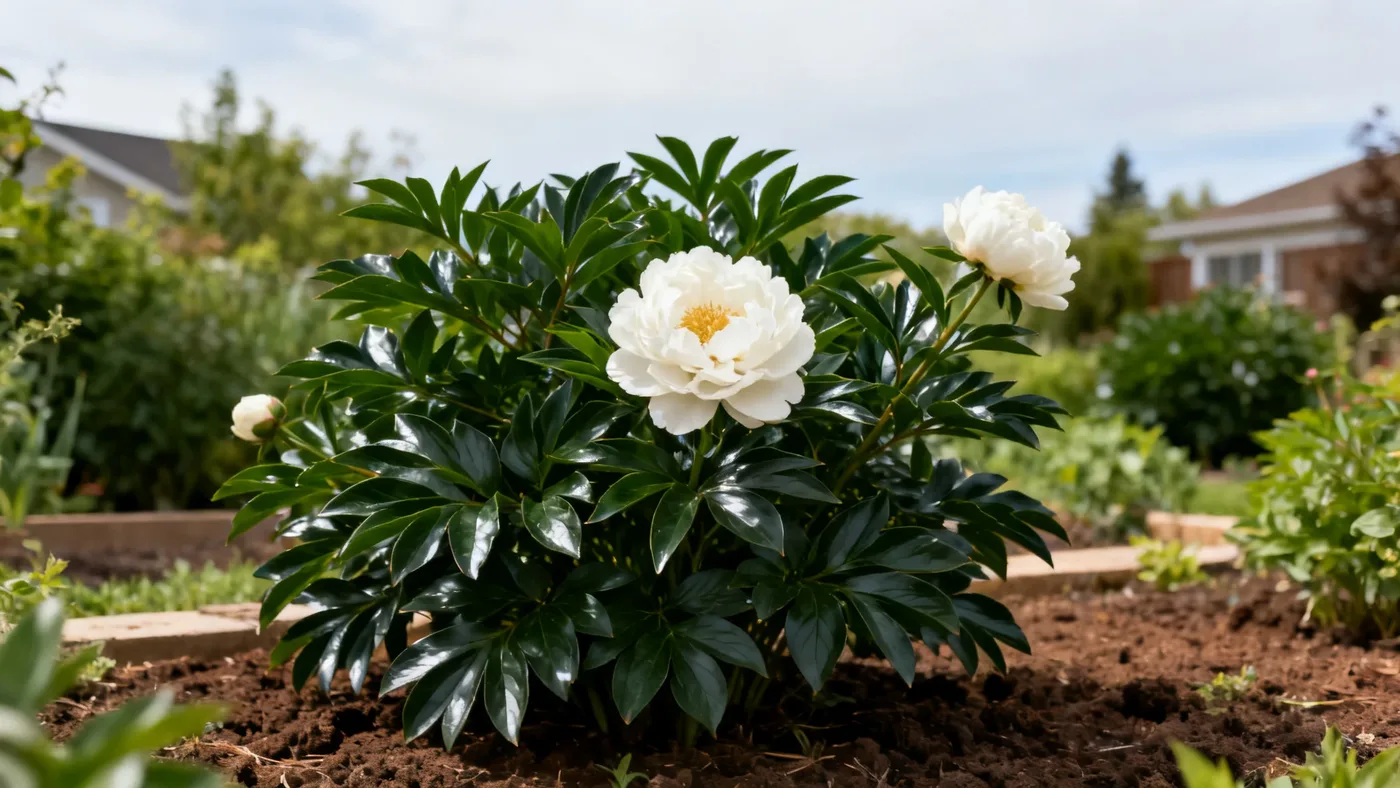
Best Soil for Sarah Bernhardt Peony: pH and Drainage
Sarah Bernhardt Peonies are famously long-lived perennials, often thriving for 20 to 50+ years with minimal care. But that decades-long commitment begins with one critical step: getting the soil right. More home gardeners struggle with peony bloom failure from poor soil conditions than from any other cause. The good news is that preparing proper soil for Sarah Bernhardt Peony is straightforward, and the results compound over years as your plant matures.
What Sarah Bernhardt Peonies Need from Soil
Sarah Bernhardt Peonies are herbaceous perennials that grow back from tuberous roots each spring. Those roots need a specific combination of conditions to establish themselves and support the plant through its full life cycle. The ideal growing medium is fertile, humus-rich, well-drained loam. The plant thrives in a soil pH of 6.5 to 7.0, which is neutral to slightly acidic. This narrow range is not arbitrary. When pH drifts too high (alkaline) or too low (acidic), the plant struggles to take up essential nutrients, and blooming suffers.
Drainage is equally non-negotiable. Peonies despise wet feet. Sitting in waterlogged soil triggers root rot and fungal diseases that can kill the plant or set it back years. At the same time, the soil must retain moderate moisture during the bloom period (late spring to early summer, typically May through June depending on your zone). Balancing moisture retention with drainage is where organic matter becomes your secret weapon.
Materials and Ingredients You Will Need
Before you break ground, gather these amendments and tools.
- Soil pH test kit (inexpensive, from any garden center) or arrange for a professional soil test through your local extension service
- Well-aged compost or composted bark (3 to 4 cubic yards for a bed of 4 to 6 plants, spaced 3 feet apart center to center)
- Peat moss or coconut coir (optional, for additional humus and water retention)
- Bone meal (phosphorus-rich, supports root development and blooming)
- Agricultural lime (if soil pH is below 6.5)
- Sulfur powder (if soil pH is above 7.0)
- Spade or garden fork
- Wheelbarrow
- Gardening gloves
- Measuring tape
Step-by-Step Soil Preparation for Sarah Bernhardt Peony
Step 1: Test Your Current Soil pH
Before amending anything, determine what you are working with. Use a soil pH test kit following the kit's instructions, or better yet, submit a sample to your local extension service for a comprehensive soil analysis. This test will reveal your starting pH and nutrient levels. You need a result in the 6.5 to 7.0 range. If your soil is significantly different, you will need to adjust it.
Step 2: Clear and Loosen the Planting Area
Remove grass, weeds, and existing plants from a circle at least 3 feet in diameter (the mature width of a Sarah Bernhardt Peony). Use a spade to loosen the top 12 to 14 inches of soil. You are not replacing the soil entirely; you are amending what is already there. Break up any compacted layers so water and roots can penetrate deeply.
Step 3: Amend for Organic Matter and Drainage
Spread 3 to 4 inches of well-aged compost or composted bark over the loosened area. If your native soil is heavy clay, also add 2 inches of peat moss or coconut coir to improve drainage and water-holding capacity. Using both compost and a moisture-retaining medium helps you avoid the trap of choosing between drainage and hydration; the organic matter does both jobs. Mix these amendments into the top 8 to 10 inches of soil with a garden fork, working thoroughly so no large clumps remain.
Step 4: Add Phosphorus for Root and Bloom Development
Sprinkle bone meal over the amended area at a rate of about 2 to 3 tablespoons per square foot, or follow the package rate. Bone meal is low in nitrogen (which promotes foliage over blooms) and rich in phosphorus, supporting strong root systems and flowering. Work it gently into the top few inches.
Step 5: Adjust pH If Needed
If your soil test showed pH below 6.5, apply agricultural lime according to the test results and product label. If pH is above 7.0, apply sulfur powder the same way. These materials work slowly, so apply them now and allow 2 to 4 weeks before planting. If you are amending in fall (the preferred planting season), the soil will have months to equilibrate.
Do not over-correct. A single application is usually enough. If pH remains outside the target range after a planting season, you can retest and make a small follow-up adjustment in the next year.
Step 6: Rake and Level
Rake the amended bed smooth and level. The final soil surface should be 1 to 2 inches above the surrounding grade to account for settling. This slight mounding also ensures water drains away from the base of the plant.
Planting Depth: A Critical Detail
Once your soil is ready, the single most common planting error is positioning the eyes (growing buds) of the peony crown too deep. The eyes should be no more than 1 to 2 inches below the soil surface. Plant too deep, and the peony may take years to bloom or never bloom at all. Plant too shallow, and the crown dries out and fails to establish. Your well-prepared soil bed gives you the depth control you need.
Tips and Common Mistakes
Mistake 1: Assuming native soil is good enough. Sarah Bernhardt Peonies are tough, but they are not forgiving when it comes to drainage and pH. Even small gardens have variable soil. Test first.
Mistake 2: Using fresh manure or undecayed bark. Fresh amendments tie up nitrogen and can burn roots. Always use well-aged, finished compost.
Mistake 3: Skipping lime or sulfur adjustment. If your pH is off by 0.5 to 1.0 unit, the plant may establish but struggle to bloom in years 2 to 4. Spend the time on pH now.
Mistake 4: Creating a soggy bed in an attempt to help. Do not add so much organic matter that the bed stays wet. The goal is fertile and well-drained, not a swamp. If your native soil is already clay-heavy and poorly draining, consider planting on a slight berm or mound to improve drainage further.
Tip 1: Space multiple Sarah Bernhardt Peonies 3 feet apart, center to center. Good air circulation and individual soil space matter, especially in humid regions where botrytis (gray mold) can appear in wet springs.
Tip 2: Fall is the preferred planting season. Amending soil in late summer or early fall gives the roots the entire dormant season to establish before spring growth. You can also plant potted Sarah Bernhardt Peonies in early spring, but fall planting often yields stronger first-season root development.
Tip 3: Do not fertilize heavily in the first year. Your amended soil is already rich. Too much nitrogen promotes foliage at the expense of roots and blooms. Once established, a light phosphorus-rich feeding (such as bone meal or a 5-10-10 fertilizer) in early spring as shoots emerge is sufficient.
What to Expect Over Time
Sarah Bernhardt Peonies are slow to establish. Light bloom may appear in years 1 to 2 after planting, but full, mature blooms typically take 3 to 4 years. If you have prepared your soil correctly, each year will bring stronger stems, larger flowers, and denser foliage. A peony is a perennial investment; the soil work you do now is the foundation for decades of performance.
Related Reading
For complete guidance on growing and maintaining your Sarah Bernhardt Peony once it is planted, see our complete Sarah Bernhardt Peony care guide. It covers watering, pruning, fertilizing, staking heavy blooms, and managing pests and diseases year-round.
Quick Reference: Soil Preparation Checklist
| Task | Target / Specification | Timing |
|---|---|---|
| Test soil pH | Current pH result (target: 6.5-7.0) | 2-4 weeks before planting |
| Loosen planting area | 12-14 inches deep, 3 ft diameter minimum | Before amendment |
| Add compost or bark | 3-4 inches worked into top 8-10 inches | Before amendment |
| Add peat moss (if clay heavy) | 2 inches, mixed in | Before amendment |
| Apply bone meal | 2-3 tablespoons per sq ft | Before amendment |
| Apply lime (if pH low) | Per soil test / label rate | 2-4 weeks before planting |
| Apply sulfur (if pH high) | Per soil test / label rate | 2-4 weeks before planting |
| Level and settle bed | 1-2 inches above grade | Day before planting |
| Plant peony crown | Eyes 1-2 inches below soil surface | Fall (preferred) or early spring |
| Space plants | 3 feet apart, center to center | At planting |
| Monitor first year | Regular watering; avoid wet feet | Year 1 after planting |