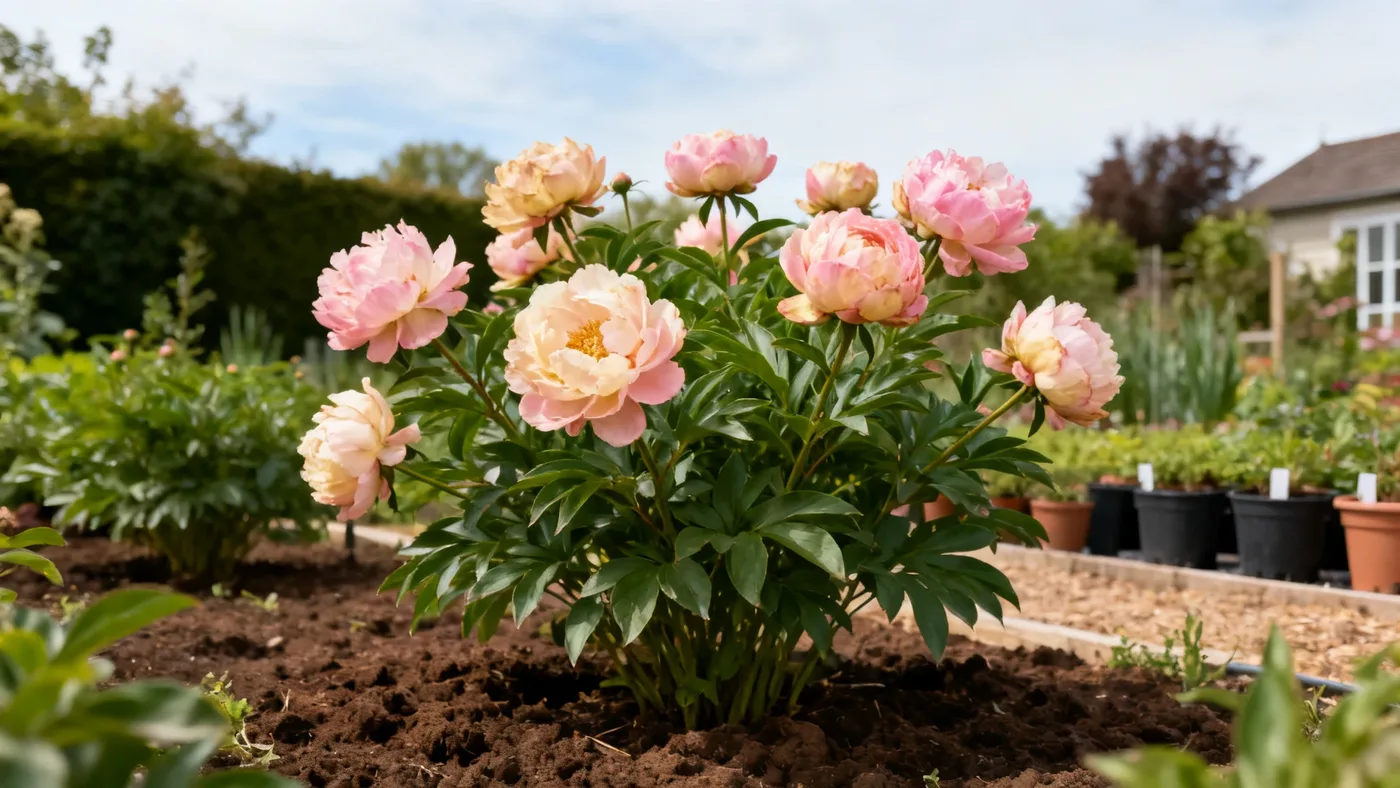
Why Isn't My Sarah Bernhardt Peony Blooming This Year?
Few things frustrate a gardener like a peony that looks healthy but refuses to flower. You've given it sun, watered it through dry spells, and watched it come back reliably each spring. So why are there only leaves and no fragrant blush-pink blooms?
The answer usually isn't complicated, but there are several stubborn myths about Sarah Bernhardt Peony (Paeonia lactiflora 'Sarah Bernhardt') blooming failure that lead gardeners down the wrong path. This guide separates fact from folklore so you can diagnose and fix the real problem.
Myth 1: Ants Are Destroying My Peony Blooms
This is the most pervasive myth about peonies and ants, and it has caused countless gardeners to spray, dust, and fret needlessly.
The Myth: Ants crawl all over peony buds and prevent the flowers from opening. If you don't eliminate the ants, your peonies won't bloom.
The Truth: Research indicates that ants are attracted to the nectar that peonies naturally produce on the outside of their buds. However, evidence shows that ants do not inhibit bloom or prevent flowers from opening. This relationship is entirely harmless to the plant. The ants are simply foraging for food, just as they would at dozens of other nectar sources in your garden.
Why This Myth Exists: Ants are so commonly visible on peony buds that gardeners naturally assume they must be doing something. The sheer volume of ants can look alarming, especially if you watch them crawl over a tight bud day after day. It's easy to connect the presence of ants to a lack of blooms and assume causation. Additionally, older gardening advice sometimes recommended ant control as standard practice, and that guidance persists even though there's no botanical reason for it.
If your Sarah Bernhardt Peony isn't blooming, the ants are a red herring. Look elsewhere for the actual cause.
Myth 2: My Peony Should Bloom the First Year After Planting
The Myth: Nursery-grown peonies arrive large enough to flower immediately, so they should bloom in the first year after planting.
The Truth: Sarah Bernhardt Peony reaches full, mature bloom display typically between 3 to 4 years after planting. Light or scattered flowering is possible in year 1 or 2, but this is not the norm. The plant spends its first few seasons investing energy into establishing a robust underground root system. This delayed bloom is not a sign of failure; it's a sign that the peony is doing exactly what it should.
The growth rate of peonies is slow to moderate because they are herbaceous perennials, meaning their above-ground foliage dies back completely each fall. The underground tuberous roots remain dormant and regrow new shoots every spring. This regeneration takes time and energy. The plant must build a sufficiently large root system before it has the reserves to produce the heavy double blooms Sarah Bernhardt is known for.
Why This Myth Exists: Gardeners expect potted nursery stock to flower relatively soon because annuals and many smaller perennials do bloom within a season or two of planting. Peonies are different. They are extremely long-lived, often performing well for 20 to 50+ years in the landscape, sometimes for a century or more with minimal care. This longevity requires patience at the beginning.
If your Sarah Bernhardt is in its first or second year and hasn't flowered yet, this is completely normal. Give it time and consistent care.
Myth 3: I Need to Feed My Peony Heavily to Get More Blooms
The Myth: Peonies are hungry plants that need rich fertilizer applications throughout the season to produce abundant flowers.
The Truth: Over-fertilizing, especially with nitrogen-heavy fertilizers, actually reduces blooming in Sarah Bernhardt Peony. Evidence indicates that excess nitrogen promotes leafy growth at the expense of flower production. The plant channels energy into foliage instead of buds.
Instead, a light application of a low-nitrogen, phosphorus-rich fertilizer (such as bone meal or a balanced 5-10-10 formula) applied once in early spring as shoots emerge is all Sarah Bernhardt needs. One application per year. That's it.
Why This Myth Exists: Garden folklore often equates fertilizer with success. More feeding is assumed to equal more flowers. Additionally, commercial fertilizers are heavily marketed to gardeners, and the idea of a mineral-rich boost feels helpful and proactive. In reality, Sarah Bernhardt is a naturally vigorous, long-lived perennial that thrives in fertile, humus-rich soil. If your soil is reasonably good, the plant will perform well without supplemental feeding beyond that single spring application.
If you've been fertilizing heavily and seeing no blooms, cut back. Your peony may reward you with flowers once you stop.
Myth 4: Peonies Won't Bloom Without Full Sun All Day
The Myth: Peonies are sun worshippers that need unobstructed sunlight from dawn to dusk, or they simply won't flower.
The Truth: Sarah Bernhardt Peony requires full sun (6 or more hours of direct sunlight) to bloom reliably. This is an important requirement. However, research suggests that light afternoon shade is actually helpful in hot southern zones (zones 7 and 8) to prolong bloom and protect the delicate petals from intense heat stress and fading.
The key is that 6+ hours of sun must include the morning and midday hours, when light intensity is strongest. A location that receives 4 hours of morning sun and 3 hours of late afternoon shade meets the requirement. A spot that gets dappled afternoon light but full morning exposure works. What doesn't work is heavy shade all day or even consistent afternoon-only sun without morning light.
Why This Myth Exists: Because peonies absolutely do require full sun, gardeners sometimes overcorrect by thinking shade is an enemy under all circumstances. The myth hardens into "full sun or nothing." In reality, the requirement is more nuanced, especially in hot climates where a bit of afternoon shade is beneficial.
If your Sarah Bernhardt gets at least 6 hours of direct sun (ideally including morning and midday light) and still isn't blooming after 3 to 4 years, the problem is not sun.
Myth 5: Watering More Frequently Will Encourage Blooms
The Myth: Keeping the soil constantly moist or wet gives peonies the hydration they need to produce flowers.
The Truth: Sarah Bernhardt Peony needs moderate, regular watering during establishment and bloom, but the soil must drain well and should be allowed to dry slightly between waterings. Wet feet (soggy or waterlogged soil) are an enemy to peony roots. Evidence indicates that overly wet conditions increase the risk of diseases like botrytis blight and root rot, both of which can kill flower buds and prevent blooming.
Once established, Sarah Bernhardt shows moderate drought tolerance. The plant can survive dry periods but blooms more reliably if watered regularly during its bloom window (late spring to early summer, typically May-June depending on your zone). The goal is moist but not soggy.
Why This Myth Exists: "More water" seems logical for encouraging flowering, and gardeners who have success with water-loving plants may assume the same logic applies to peonies. Additionally, if a peony shows wilting during an unusually hot spell, the gardener may over-correct by watering constantly. Peonies wilt slightly before their bloom; this is normal physiology, not a sign of thirst.
If your Sarah Bernhardt is planted in clay soil or a low spot where water pools, improve drainage before adding more water. Boggy soil is more likely to prevent blooming than dry soil.
Myth 6: Deep Planting Gives Peonies Better Support and More Blooms
The Myth: Burying the peony's tuberous eyes deep in the soil, like you might with tulips or other bulbs, provides stability and promotes better flowering.
The Truth: This is the single most common cause of Sarah Bernhardt Peony blooming failure, and it's almost entirely due to incorrect planting depth. The peony's eyes (the growth points where shoots emerge) should be planted no more than 1 to 2 inches below the soil surface. Deeper planting, even by a few inches, prevents the eyes from sending up shoots and forming flower buds.
Why do peonies have this requirement? Research indicates that the eyes need to be close enough to the surface to receive the chill period (winter dormancy signals) and warming signals (spring temperature rise) that trigger growth. Eyes buried too deep don't sense these seasonal shifts and remain dormant.
Sarah Bernhardt blooms can be heavy and the stems may need staking in some seasons, but this issue is solved with a peony ring or simple stakes, not by planting deeper. Deeper planting doesn't provide better support; it prevents blooming entirely.
Why This Myth Exists: Gardeners who have success planting spring bulbs deeply assume the same rule applies to peonies. Additionally, some older literature conflates peony planting depth with stability, even though the evidence is now clear that 1 to 2 inches is the correct depth. If you've purchased a bare-root peony and the roots are lengthy, it's tempting to dig a deep hole and let them sprawl downward. Resist the urge. The eyes go shallow, and the roots will adapt and spread into the wider planting hole anyway.
If you inherited a non-blooming peony from a previous owner (or planted too deep yourself), you can carefully lift it in early fall, replant at the correct depth (1 to 2 inches), and expect blooms within 1 to 2 additional years once the plant re-establishes.
Myth 7: Botrytis Blight Means I'll Never Get Blooms
The Myth: If your peony shows gray mold (botrytis) on buds or stems, it's permanently damaged and won't flower.
The Truth: Botrytis blight is a fungal disease that thrives in wet, humid springs. It can damage or kill flower buds in a given season, leading to no bloom that year. However, this is a seasonal problem, not a permanent one. Evidence indicates that botrytis is more severe in particularly wet years and affects the current season's buds, not the plant's long-term ability to produce flowers.
If botrytis kills this year's buds, next year's bloom is unaffected as long as you've improved air circulation (plant spacing is 3 feet apart, center to center, to allow good airflow) and you cut back dead foliage to the ground after frost each fall. Clean up immediately; don't let diseased plant material linger on the soil.
Why This Myth Exists: A season without blooms due to botrytis can feel catastrophic, especially if the gardener doesn't recognize it as a temporary disease issue. The sight of moldy buds makes gardeners assume the plant is ruined.
Botrytis is frustrating but recoverable. If you see it, remove affected buds and improve air circulation. Next year should be better, especially if the spring is drier.
What If It's None of These?
If your Sarah Bernhardt is in a good spot, at the correct planting depth, more than 3 years old, and still not blooming, consider these additional factors:
- Wrong cultivar: Confirm you have 'Sarah Bernhardt' and not a similar pink lactiflora such as 'Monsieur Jules Elie' or 'Shirley Temple', which have different growth habits.
- Extreme weather: A hard late frost after shoots emerge can kill developing buds for that season only. This is temporary.
- Root disturbance: If the peony was recently divided or moved (peonies resent disturbance), it may take 2 to 3 additional years to recover and bloom.
- Soil pH way off: Sarah Bernhardt prefers neutral to slightly acidic soil (pH 6.5 to 7.0). If your soil is very alkaline or very acidic, a soil test can guide an amendment plan.
For a complete troubleshooting guide and detailed care instructions, see the complete Sarah Bernhardt peony care guide.
Quick Reference: Common Bloom-Failure Causes and Fixes
| Issue | Symptom | Fix | Timeline |
|---|---|---|---|
| Ants on buds | Visible ants crawling on buds; buds still open | None needed; ants are harmless | N/A |
| Too young | Plant is 1-2 years old; otherwise healthy | Wait and maintain consistent care | 2-3 more years to full bloom |
| Planting too deep | Plant is mature but never blooms; eyes are 3+ inches below soil | Carefully lift and replant in fall with eyes 1-2 inches deep | 1-2 years after replanting |
| Over-fertilizing | Lush foliage; few or no buds | Stop fertilizing except for one spring application of low-N formula | Next season |
| Insufficient sun | Plant receives less than 6 hours direct light | Relocate to a sunnier spot, or prune nearby tree branches | Next season or following year |
| Wet/soggy soil | Soil stays soggy after rain; plant in low spot or heavy clay | Improve drainage; amend with compost; consider raised bed | Next growing season |
| Botrytis blight | Gray mold on buds; buds rot and don't open in wet spring | Remove affected buds; improve air circulation (space 3 ft apart); clean up fall foliage | Next season if spring is drier |