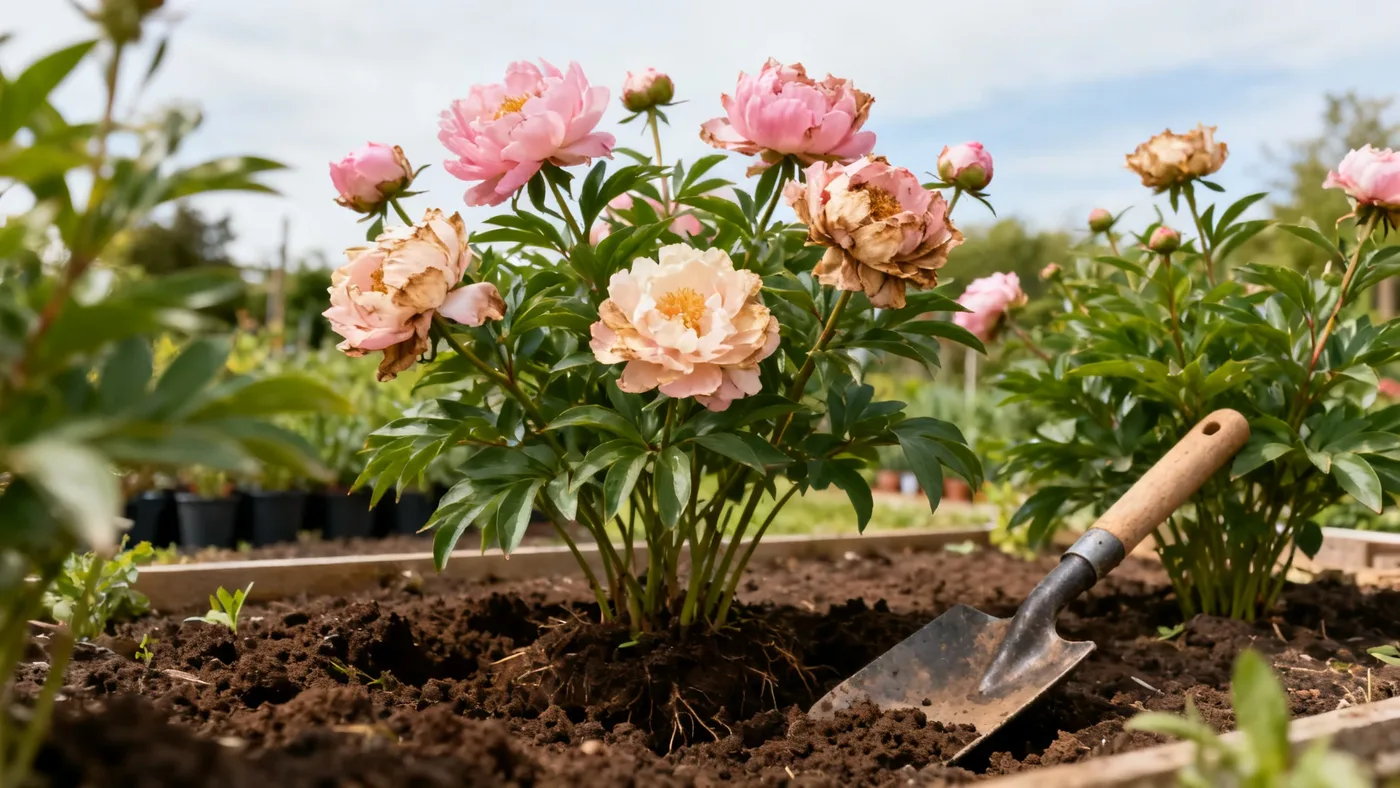
How to Plant Sarah Bernhardt Peony for Big Spring Blooms
The Sarah Bernhardt Peony is a classic double-bloom perennial that delivers pale pink flowers with a sweet rose-like fragrance each late spring. But getting those big, showy blooms requires getting the planting right from day one. The most common reason peonies fail to flower is a single mistake made at planting time, and it's one you can easily avoid with the proper instructions.
This guide walks you through exactly how to plant Sarah Bernhardt Peony so it thrives for decades in your garden.
When to Plant Peonies
Timing matters. Fall is the preferred planting season for bare-root Sarah Bernhardt Peonies. Planting in fall allows the root system to establish itself over winter, so the plant is ready to surge into growth when spring arrives. This head start often means slightly earlier blooms and a more robust plant in year one.
If you're working with a potted peony from a nursery, you can also plant it in early spring as soon as the soil is workable. Spring plantings typically perform well, though they may not establish quite as thoroughly before their first bloom season.
Wherever you live within USDA zones 3-8, fall planting is generally recommended. In warmer zones, aim to plant in late September or October when soil temperatures have cooled.
What You'll Need Before You Plant
Gather these materials before digging:
- A bare-root Sarah Bernhardt Peony (or potted nursery plant)
- A shovel or spade
- Compost or aged manure (2 to 3 buckets per planting hole)
- Bone meal or a balanced 5-10-10 fertilizer
- A measuring tape or ruler
- Garden gloves
- A watering can or hose
- Soil pH test kit (optional but helpful)
Understand Your Soil First
Sarah Bernhardt Peonies thrive in fertile, humus-rich, well-drained loam with a soil pH between 6.5 and 7.0. Before planting, take a moment to assess what you're working with.
If your soil is sandy and drains too quickly, add compost to improve water retention. If it's clay-heavy and holds moisture, work in compost to improve drainage and prevent wet feet, which peonies dislike. A soil test from your local extension service will tell you the pH, but if you're not sure, aim to add compost anyway. It improves both drainage and fertility.
Sarah Bernhardt Peony Planting Depth: The Critical Rule
Here is the single most important instruction for how to plant Sarah Bernhardt Peony: the planting eyes (the buds on the root system) must sit no more than 1 to 2 inches below the soil surface. Not 3 inches. Not 4 inches. This depth rule is non-negotiable.
Plant the eyes too deep, and the peony will struggle for years to produce flowers. Some gardeners plant with the eyes 4 or 5 inches deep and wonder why their peonies never bloom. Plant with eyes only 1 to 2 inches below soil level, and you're setting up for success.
Bare-root peonies typically ship with 3 to 5 eyes visible on the root cluster. Count them when your plant arrives, then measure twice before backfilling.
Step-by-Step Planting Instructions
Step 1: Choose a planting location. Select a spot that receives at least 6 hours of direct sun daily. In hot southern zones, light afternoon shade helps extend the bloom and keeps flowers from fading too quickly. Avoid areas that stay wet or where peonies were recently grown (to prevent disease carryover).
Step 2: Measure your spacing. If planting multiple peonies, space them 3 feet apart, center to center. This gives each plant room to reach its mature width of 24 to 36 inches without crowding its neighbors.
Step 3: Dig the planting hole. Dig a hole about 18 inches deep and 18 inches wide. This gives you room to work with the root system and amend the soil generously. Loosen the soil at the bottom of the hole so roots can penetrate easily.
Step 4: Amend and backfill halfway. Place 2 to 3 buckets of compost or aged manure into the hole, mixing it with the native soil. Backfill until you have a small mound in the center of the hole. This mound is where the roots will rest.
Step 5: Position the roots. Place the bare-root peony on top of the mound, spreading the roots downward and outward as naturally as possible. If you're planting a potted peony, gently tease out the root ball and position it at the same depth it was growing in the container. The key is to keep those eyes at 1 to 2 inches below final soil level.
Step 6: Backfill and firm gently. Fill the hole with amended soil, firming it gently as you go. Avoid compacting heavily, which can restrict root growth. Water as you backfill to eliminate air pockets and settle the soil.
Step 7: Water thoroughly. After planting, give the area a deep watering. This settles the soil and ensures good root-to-soil contact. The soil should be moist (not waterlogged) at the planting level.
Step 8: Apply mulch lightly. Spread a thin 1-inch layer of mulch (bark, wood chips, or compost) around the base, keeping it a few inches away from the crown. This moderates soil temperature and retains moisture without suffocating the plant.
Care Immediately After Planting
In fall, water your newly planted peony once a week if rainfall is sparse. The goal is to keep the soil consistently moist (not soggy) so roots can establish themselves before the ground freezes.
In spring, when shoots emerge, allow the soil to dry slightly between waterings. During bloom time and active growth, maintain regular watering. Once established, Sarah Bernhardt Peonies show moderate drought tolerance, but they still appreciate consistent moisture during the growing and blooming season.
In early spring of year one, as new shoots push up, apply a light dusting of bone meal or a low-nitrogen, phosphorus-rich fertilizer (such as a 5-10-10 blend) around the base. Avoid high-nitrogen fertilizers, which promote foliage at the expense of flowers.
What to Expect: Year by Year
Year 1: Your newly planted Sarah Bernhardt Peony may produce light blooms or just foliage. Don't be discouraged. The plant is investing energy into establishing a strong root system. Enjoy whatever flowers appear, and deadhead spent blooms to redirect energy back to the roots.
Years 2-3: Bloom production increases. By year 2 or 3, you'll see noticeably more flowers, though the display may not yet be at full maturity. The foliage will also become denser and more vigorous.
Year 3-4 and beyond: Full, mature bloom displays typically arrive in year 3 or 4 after planting. At this point, your Sarah Bernhardt is established, and you can expect consistent, abundant pale pink flowers in late spring to early summer (May-June, depending on your zone). The blooms will fade lighter with age, creating a soft, romantic effect.
Peonies are very long-lived. With minimal care, a healthy Sarah Bernhardt Peony commonly produces blooms for 20 to 50 years or more, with some specimens documented at a century or beyond.
Common Planting Mistakes to Avoid
Planting too deep is mistake number one, but there are others:
| Mistake | Why It Happens | How to Avoid It |
|---|---|---|
| Eyes planted more than 1-2 inches deep | Gardeners think "deeper is better" for winter protection | Measure the depth twice. Peonies need shallow planting, full stop. |
| Planting in shade or partial sun | Available space happens to be shady | Wait and move the peony, or choose a sunnier site. Peonies need 6+ hours of sun for full blooms. |
| Soil stays too wet | Heavy clay soil or poor drainage | Amend with compost before planting. Avoid low-lying spots that collect water. |
| Planting too close to other perennials | Underestimating mature size (24-36 inches wide) | Space at 3 feet center-to-center. Peonies don't like crowding. |
| Using high-nitrogen fertilizer | General-purpose fertilizer promotes leafy growth | Choose bone meal or a 5-10-10 mix instead. Low nitrogen, higher phosphorus. |
| Planting in spring only, when bare-root is available in fall | Not knowing fall is the preferred season | Source bare-root peonies in September-October for best establishment. |
Linking Your Peony to Ongoing Care
Once your Sarah Bernhardt Peony is in the ground, you'll want to know how to care for it year-round. The planting phase is just the beginning. For detailed guidance on watering, feeding, pruning, pest management, and maximizing blooms throughout the season, see the complete Sarah Bernhardt Peony care guide.
Quick Reference: Planting Checklist
| Task | Timing | Key Detail |
|---|---|---|
| Choose location | Before planting | 6+ hours sun; well-drained soil |
| Test soil pH | Before planting (optional) | Target 6.5-7.0 |
| Dig hole | At planting time | 18 in deep, 18 in wide |
| Amend soil with compost | At planting time | 2-3 buckets per hole |
| Position roots | At planting time | Eyes 1-2 in below soil surface |
| Backfill and water | At planting time | Firm gently; soak in |
| Apply mulch | After planting | 1 in layer; keep 3 in from crown |
| Water regularly | Fall (if planted fall); spring-summer | Moist, not waterlogged |
| Apply phosphorus-rich fertilizer | Early spring, year 1+ | Bone meal or 5-10-10 blend |
| Deadhead spent blooms | During bloom season | Redirects energy to roots |
| Cut back foliage | After fall frost | Cut to 2-3 in above ground |