Sarah Bernhardt Peony vs Karl Rosenfield Peony Compared
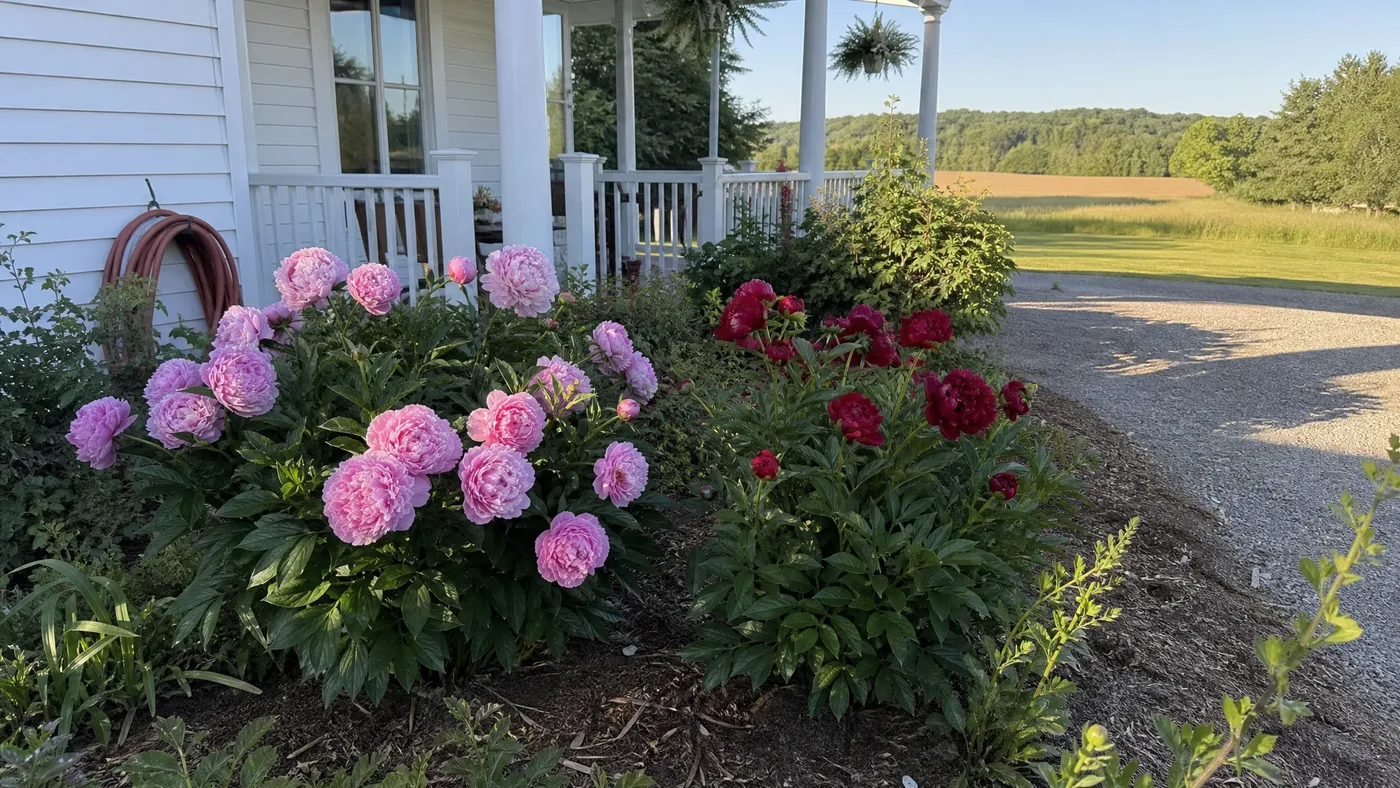
Close your eyes and picture a June peony. Is it a blush pink ruffle that looks like a ballgown, or a deep crimson bomb that looks almost like velvet? Whichever you see decides most of this comparison, because Sarah Bernhardt and Karl Rosenfield are both big double lactiflora peonies, and color is what separates them first.
The choice matters more than it looks. A peony goes in once and stays for decades, and the root needs years to settle before it gives its best bloom. A wrong pick means a long wait for the wrong flower. Read on for how the two compare on color, scent, rain, staking, timing and cost, then a plain set of rules for choosing.
Bloom Color From Blush Pink to Deep Red
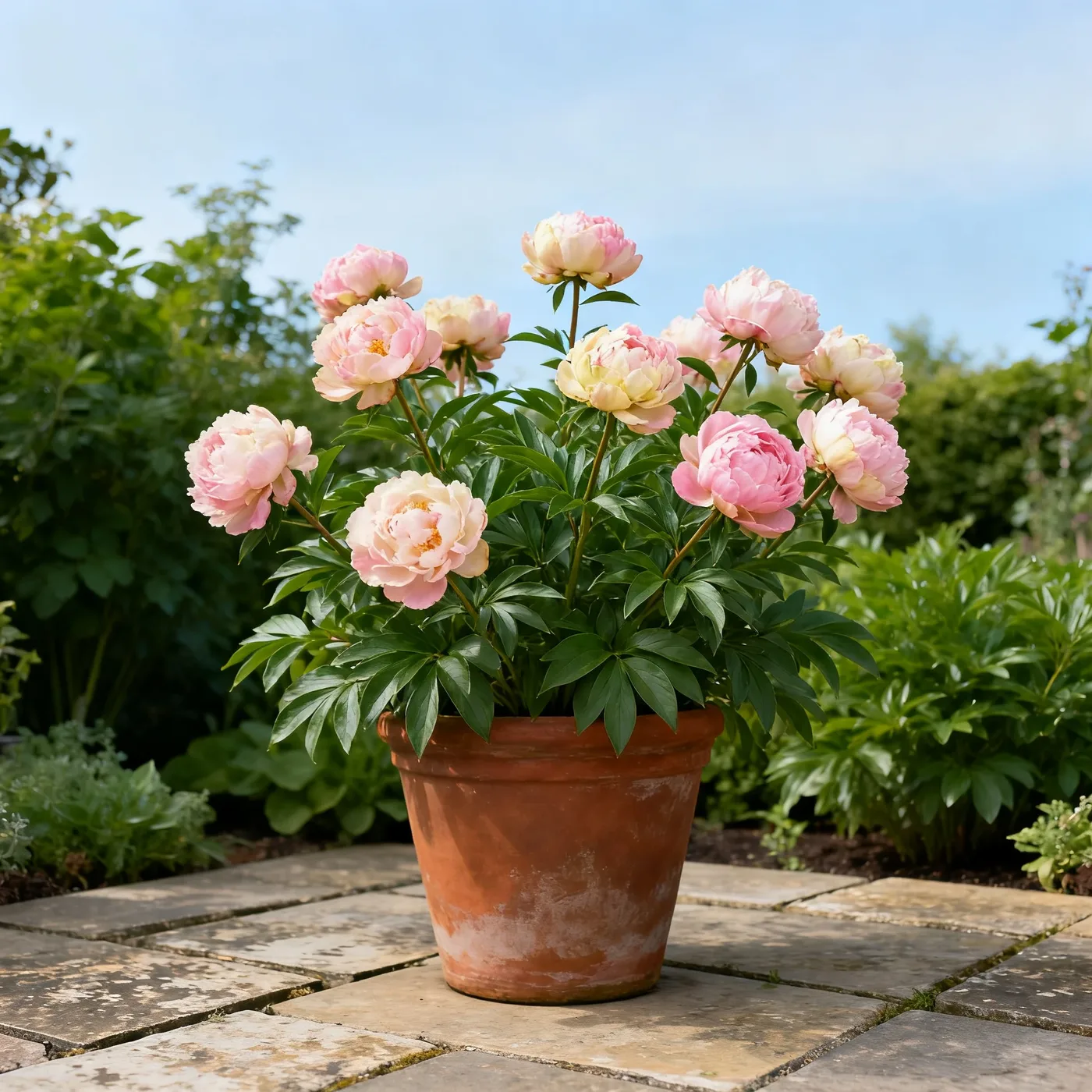
Put a Sarah Bernhardt bloom beside a Karl Rosenfield and you stop comparing plants and start choosing a mood. Sarah Bernhardt opens as a fragrant, rose-pink double about 8 inches across, softer toward the edges. Iowa State Extension's cultivar list describes Karl Rosenfield as a dark red, double-flowered herbaceous peony, and lists Sarah Bernhardt as a pastel pink double.
In a bed, the two behave very differently. Pink melts into its neighbors and glows at dusk, so it pairs easily with white, silver foliage and blue flowers. Red does the opposite. It becomes the anchor of the planting and pulls the eye from across the yard, which is wonderful when you want that and tiring when you don't.
| Trait | Sarah Bernhardt | Karl Rosenfield |
|---|---|---|
| Color | Rose-pink | Dark red |
| Flower form | Full double, about 8 inches wide | Double |
| In the border | Softens and blends with most colors | Acts as a focal point |
| In the vase | Romantic, mixes with almost anything | Dramatic, best alone or with greenery |
The vase tells the same story. A jar of pink doubles reads as soft and old-fashioned on a windowsill, and it sits happily beside white roses or sweet peas. A jar of dark red doubles reads as formal. It wants plain green foliage and a simple container, and it can overpower a small table.
Verdict: choose by the space around the plant. For a mixed cottage border we lean toward Sarah Bernhardt, because it works with more neighbors. For a hedge edge, a gate or a spot that needs a strong accent, Karl Rosenfield earns its place. Our Sarah Bernhardt bloom and color guide shows how the pink shifts as the flower ages.
Fragrance Strength in the Sarah Bernhardt Peony
Cut three Sarah Bernhardt stems, set them in a jar on the kitchen table, and by evening the room smells of them. That is the scent most people mean when they say they want an old-fashioned peony. The cultivar is fragrant, though fragrance varies among lactiflora cultivars, with a few having disagreeable scents.
That variation is the reason we won't promise anything about Karl Rosenfield's scent. The sources we trust do not rate it, and noses differ. If fragrance is the reason you are buying, smell a Karl Rosenfield bloom in a neighbor's garden or at a local peony show before you commit. Don't rely on a catalog adjective.
Whichever you plant, a few habits get more scent into the house. Cut in the cool morning when buds feel like soft marshmallows, then let them open indoors. Heat and wind in the garden strip fragrance fast, so a sheltered spot near a patio or path keeps more of it where you can enjoy it. Our guide on what to expect from Sarah Bernhardt's fragrance goes deeper.
Verdict: Sarah Bernhardt, clearly, for anyone who plants a peony mainly to smell it. Karl Rosenfield wins only if the red matters more than the perfume.
Which Peony Holds Up Better in Rain?
One of the most common questions we get after a June thunderstorm is whether the red or the pink survived better. The honest answer is that neither is built for it. Lactiflora plants may require support for large, double flowers, especially when they become wet with rain. Both of these are exactly that kind of flower.
A full double soaks up water like a sponge. The petals pack tightly, so they dry slowly, and the weight bends the stem toward the ground. Once a bloom sits in mud, gray mold has an easy start, which is a bigger problem than a bent stem.
Where the two differ is in how the damage shows. Rain bruising and brown petal edges stand out on a pale pink bloom, while a dark red petal hides much of the same marking. That is a difference in appearance, not in toughness.
Before and After the Storm
To protect either one, give them full sun and open spacing so air moves through the clump, and cut buds ahead of a forecast storm to finish in a vase. Sarah Bernhardt grows 2.5 to 3 feet tall and wide, so crowding it against a fence or a neighbor keeps the foliage wet long after the rain stops.
After a storm, lift any fallen stems gently and prop them up while the ground is still soft. Pick up dropped petals from around the crown, since wet petals are where mold starts. A bloom that is already a soggy mess is better cut and discarded than left to rot on the stem.
Verdict: a tie on structure, with a small edge to Karl Rosenfield for hiding rain marks. Your support system matters far more than which cultivar you choose.
Staking Needs of Sarah Bernhardt Peony Stems
In our rows, the stems lying flat after a storm are almost always the ones nobody ringed. Sarah Bernhardt reaches roughly 3 feet, up to about 35 inches, and carries a bloom around 8 inches wide at the top. That is a lot of weight on a thin stem. The blooms stay upright when you stake stems as they emerge in spring or as buds form.
The practical rule is to put the support in early, before you need it. A grow-through ring set over the plant in spring disappears under the foliage by bloom time, while a cage pushed in after the buds swell leaves broken stems and gaps. Tie nothing tightly, because stems thicken as they grow.
Size the ring for the whole clump. A mature plant spreads as wide as it is tall, so a ring that only catches the center stems leaves the outer ones to flop over its edge. Set it low, then let the foliage grow up through it.
For Karl Rosenfield, plan exactly the same way. We have found no reliable source that rates its stems as stiffer or weaker than Sarah's, and a dark red double carries just as much petal weight. Our complete Sarah Bernhardt care guide covers the rest of spring routine.
Verdict: a tie. Treat either one as a plant that needs a ring, and you will rarely see a flopped bloom.
Bloom Timing and Season Length
A gardener who plants both hoping for a six-week show is often disappointed. The display from any single peony is short, and the two overlap more than people expect.
How Long Each Plant Blooms
Extension sources agree on the basics. NC State says each plant blooms for about two weeks, and the University of Nebraska describes the lactiflora season as late spring to early summer. We won't give you a day count separating Sarah Bernhardt from Karl Rosenfield, because the gap shifts with your weather and local climate.
If you want to stretch the season, plant both and note which one opens first in your own yard. Then add an early and a late peony from a different group around them.
Chill and Climate
Timing also depends on winter. Sarah Bernhardt has a low chill hour requirement, which helps where winters are mild. The cultivar is rated hardy to between about -4°F and 5°F, and peonies as a group do well in zones 3 to 8. Ask any supplier for Karl Rosenfield's chill needs before you order for the Deep South.
The First Few Years
Season length also depends on the age of the plant. Sarah Bernhardt takes roughly 2 to 5 years to reach maturity, and a young clump gives fewer flowers than an old one. Expect the same patience with Karl Rosenfield.
Shade slows things further. If a plant produces leaves but no buds, too little sun is the first thing to check, and both cultivars want at least six hours of direct light.
Verdict: Sarah Bernhardt for warmer winters and reliable bloom, and a draw almost everywhere else.
Price and Availability of Sarah Bernhardt Peony Roots
The first thing new buyers notice is that a peony root costs more than most perennials, and the second is that it sits there for a year without doing much. Utah State Extension notes that peony plants are expensive and take 3 to 5 years to establish and come into full production.
We won't quote prices here, since they change with season and root size. What we can say is that cost per plant is a poor way to choose between these two. A cheap, weak division of either cultivar will cost you more in waiting than a stronger root costs in dollars.
Look for a firm root with several well-formed buds, and avoid anything soft, shriveled or moldy. Our guide to buying Sarah Bernhardt as bare root or potted explains what each form gives you. Both cultivars are long-established garden plants, so finding them is rarely the hard part.
Verdict: a tie. Pay for root quality, not the cultivar name, and buy the one you actually want to see in June.
Choosing Between Sarah Bernhardt Peony and Karl Rosenfield
Because the two share so much, a few if-this-then-that rules settle the choice faster than a long list of pros and cons. Start with what you pictured in the intro, then check the rest against your own yard.
- If you pictured blush pink and want a plant that blends with white, blue and silver in a mixed border, plant Sarah Bernhardt.
- If you pictured deep crimson and need one strong focal point near a gate, path or foundation, plant Karl Rosenfield.
- If you cut flowers mainly for the scent they put into a room, plant Sarah Bernhardt, since its fragrance is documented.
- If your winters are mild and you worry about chill hours, start with Sarah Bernhardt and check Karl Rosenfield's needs first.
- If you can't decide, plant one of each at least 4 feet apart, so the clumps have room to grow.
Whichever you choose, the site asks the same of you. Give the plant full sun, well-drained soil and a spot where it can stay, because peonies resent being moved. Sarah Bernhardt tolerates acid, alkaline or neutral soil, and that flexibility is one more reason it is the easier first peony.
Sarah Bernhardt also sits in our comparison with Monsieur Jules Elie, which is worth reading if you want a second pink to weigh against it.
Pink or Crimson for Your Peony Border
These two plants ask the same things of you: full sun, good drainage, a ring of support in early spring, and patience through the first seasons. The real difference is what you see and smell in June. Sarah Bernhardt gives you a fragrant rose-pink double that blends in. Karl Rosenfield gives you a dark red double that stands out.
If you want fragrance and a soft cottage look, pick Sarah Bernhardt. If you want a bold crimson accent, pick Karl Rosenfield, and then order whichever one you are picturing right now.
Sarah Bernhardt Peony
Nursery-grown Sarah Bernhardt Peony in sizes from #2, shipped to your door.
From $74.56
Shop Now →Sarah Bernhardt is happiest in open, sunny rows with soil that drains freely, and that is exactly where ours stand on our own farms. We are a small business that raises its own top-quality plants, so the peony you choose after weighing it against Karl Rosenfield comes straight from our rows. Take a look at what is in stock now and bring home the pink one.