Staking Sarah Bernhardt Peony: Cages and Supports That Work
You walk outside after a night of storms and there it is: the best bloom of the season, rose-pink and face-down in the mud. Nearly everyone who grows this peony has had that moment, and it is very fixable. Most people expect a plant that holds itself up. This one is bred for big flowers, not for standing alone in the rain.
Below, you'll find out all about supporting Sarah Bernhardt, including how to choose between rings, grow-through cages and stakes with twine, when to install each one against the height of the shoots, and how to rescue a clump you got to late.
A little planning means you get to cut and enjoy the flowers you waited years for, instead of watching a storm flatten them.
Why Sarah Bernhardt Peony Blooms Need Help
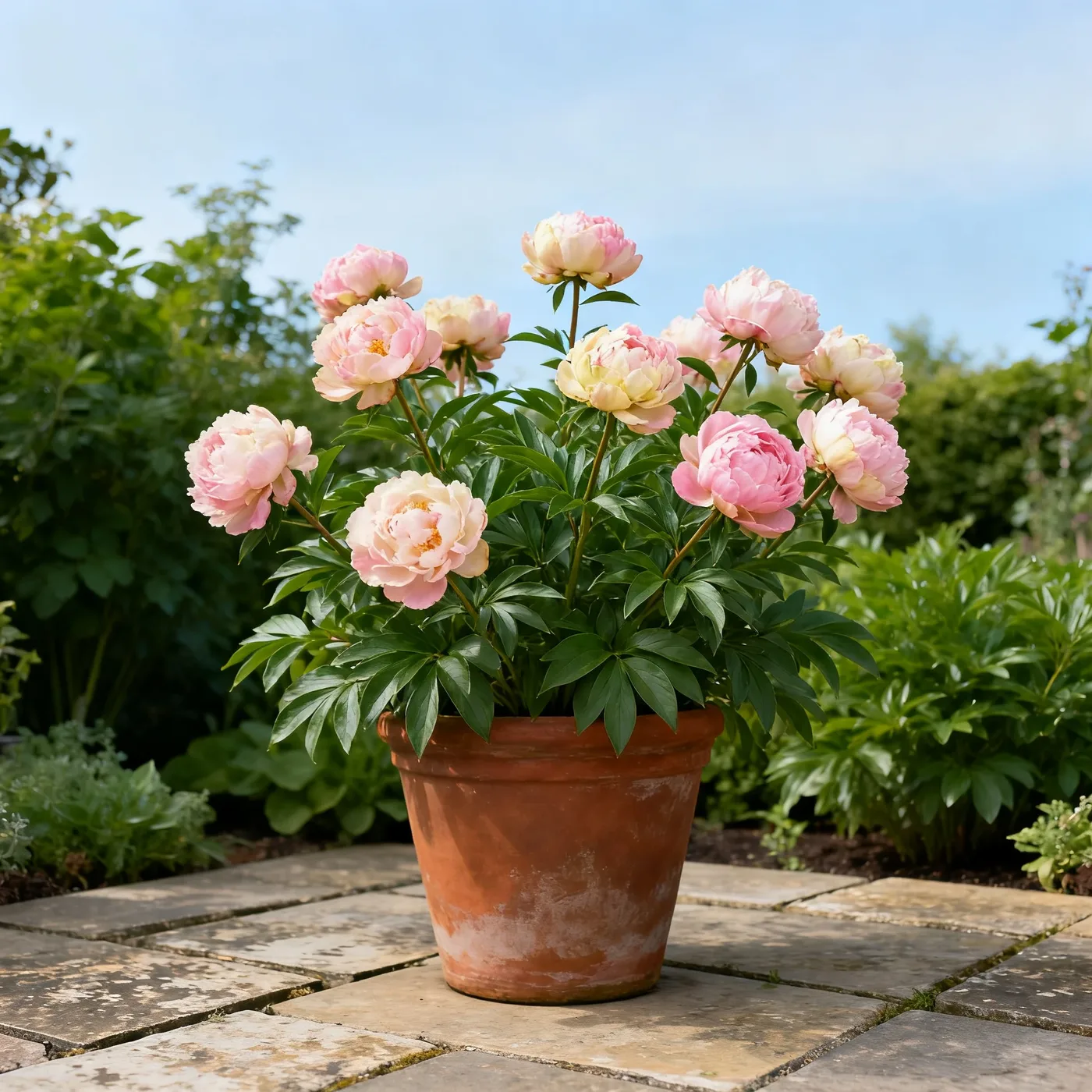
Sarah Bernhardt typically reaches about 3 feet tall by mid-spring, and every stem ends in a double, rose-pink flower around 8 inches across. That is a lot of bloom on a modest frame. Extension horticulturists note that double peony flowers have too many petals for their stems to support, and this is one of the fullest doubles we grow.
The flowers also nod. A head that hangs to one side puts its weight out past the stem, like a full bucket on a long handle, so the stem bends before it ever breaks. Add rain, because every one of those petals holds water, and a bloom that stood fine at breakfast can be on the ground by dinner.
One of the most common questions we get is whether a flopping stem means the plant is unhappy. It does not. It means the plant is doing what a big double peony does, and support is simply part of growing it, the way a tomato plant gets a cage.
The species can run taller, up to 4 feet in some references, but this cultivar tops out near 35 inches. You need a shorter, tidier support than the tall-peony advice online suggests. Our care guide touches on flopping stems, and our size guide explains how wide the clump gets.
A young plant can take three to five years to settle in and carries few stems at first, so it may need nothing yet. Put a support in anyway. It is far easier to set one around a small clump than to wrestle one onto a big one.
Peony Rings, the Simple Starting Point
Rings are where we tell most people to start. They cost little, go in within minutes, and the foliage hides them by the time the plant is in flower.
Choosing the Ring
Look for coated or galvanized steel with a grid or crosswires across the top. The grid is what keeps stems from slipping through and leaning outward. The legs should be stiff and long enough to push firmly into the soil and stay put through a windy storm. If you are buying for a young plant, an adjustable-height model lets you raise the ring as the clump grows.
A single loose hoop with no grid is cheaper, and it works for a small clump. But it only corrals stems. It does not hold them up.
Setting It Up Right
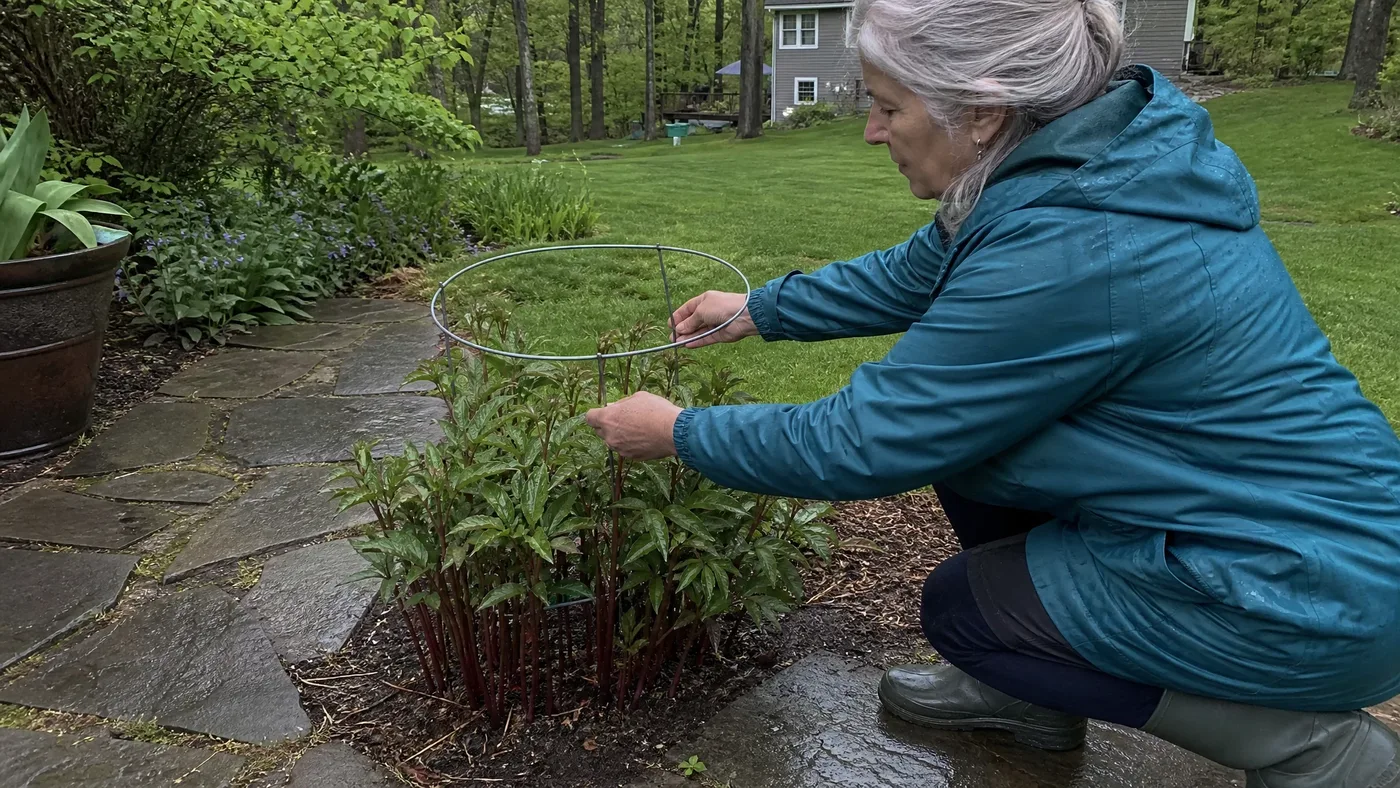
The hoop works best when set about half the height of the mature plant or slightly lower. For a plant that reaches about 3 feet, that works out to roughly 18 inches or a little under. Many people set it too high, and then the lower stems still fall over the edge.
Center the ring over the clump and make sure it sits level. Push the legs into the soil outside the crown rather than through it, so you do not spear the roots. If a few shoots have already splayed, guide them gently in through the openings with your hands.
A ring is plenty for a young clump or for a plant with only a handful of stems. Once the clump has grown wide and full, it asks for more, and that is where cages come in.
Grow-Through Cages for Bigger Clumps
A grow-through cage is a taller, sturdier cousin of the ring. It usually has several tiers or a grid of openings, so stems are held at more than one height as they climb. When customers ask us about the "best peony cages," this is the type they usually end up wanting once their plant is a few years old.
Sizing for a Mature Clump
Sarah Bernhardt's mature spread is about 20 to 39 inches, so measure your clump in late winter before you buy and choose a cage that clears the widest stems with some room to spare. Height matters less than people think. Because this cultivar stops near 3 feet, a cage much taller than that sticks out above the foliage once the flowers are over.
Timing decides how good the cage looks. Missouri Extension notes that a cage set up early gets covered by foliage, and it lists peony hoops, tomato cages and stakes with crossing strings as workable options. A tomato cage is a fair budget fix, though most are narrow, so a single one may be tight on a wide clump.
Ring or Cage?
This table sums up how the options compare for a clump of this size.
| Support | Best for | Watch for |
|---|---|---|
| Single ring | Young clumps with a few stems | Outer stems can bow out past the edge |
| Grow-through cage | Mature clumps with many stems | Needs to go on early, before the foliage fills in |
| Tomato cage | A budget fix for a mid-size clump | Narrow, so a wide clump may need two |
| Stakes and twine | Lopsided clumps and cut-flower rows | Takes a few minutes of tying |
Cages beat rings when the clump is wide, when stems are many, and when your site gets wind. A cage also lasts for years, which suits a plant you will have for decades.
Stakes and Twine for Sarah Bernhardt Peony Stems
Stakes and twine are the cheapest way to support this plant, and the most flexible. They fit a lopsided clump, a clump tucked against a wall, or a row where you want to cut stems for the house.
Materials That Cost Almost Nothing
Bamboo or wooden stakes that stand about as tall as the plant, soft cotton or jute twine, and a pair of scissors are all you need. Skip thin wire and fishing line. Under the weight of a wet flower, they cut straight into green stems.
Tying Without Damage
A simple method is to tie in a loose figure 8, with the stake in one loop and the stem in the other. The crossover keeps the stem from rubbing on the stake and leaves room for it to thicken. Tie just below the heavy head, and leave enough slack to slide a finger inside the loop.
For a whole clump, set stakes around the outside and run twine around them at about half height, then a second round higher up. Add a few crossing strings in the middle, and the stems end up in a loose web.
You will often hear that you should drive one stake in the center and bundle everything to it. We do not recommend that. It squeezes the middle of the clump, and the outer stems still flop once the flowers open.
When to Put Supports Around Sarah Bernhardt Peony
The rule we give is to install support before the plant looks like it needs it. Place a hoop over the plant early in spring, as the leaves begin to unfurl, and staking or caging early in the season prevents plant damage during installation. In practice, that means the red shoots are up and still short.
In our rows, the supports go in while the shoots still look too small to bother with. It feels early. But by mid-spring the plant is near its full height of about 3 feet, and the foliage has closed over the gaps where you would have pushed in a leg.
You will see advice to wait until buds appear so you can tell which stems need help. We would rather you did not. The same extension office calls bud formation the latest moment to stake, and that is a last call, not a target. By then every leg you push in risks a snapped stem.
Flowers open in late spring to early summer, and each plant blooms for only about two weeks. Our bloom time guide helps you pin down your own window, and you can work backward from it.
Fixing Supports You Installed Too Late
It happens to everyone. The buds have swelled, the clump is leaning or has opened out like a starfish, and a ring will no longer go on without damaging stems. Do not force it. You can still save most of the display with a gentler approach.
- Wait for a dry, calm day, because dry stems are lighter and bend back more easily than wet ones.
- Skip the ring and use stakes with soft twine instead. Push the stakes in around the outside of the clump, then loop twine around at about half height so the stems are drawn in gradually.
- Gather splayed stems loosely, never tightly, and tie any stem carrying a heavy bud with the figure 8 described above.
- Cut any stem that has already kinked or snapped and bring the bloom indoors, where you can enjoy its fragrance anyway.
Once the flowers are done, do not cut the foliage back early. The leaves are feeding the roots for next year, and our pruning guide explains when to cut. Then make a note on your calendar for early spring so you do not get caught twice.
Sarah Bernhardt Peony Standing Tall Through June Rain
Picture the same storm with support in place. The rain still comes, the heavy rose-pink heads still nod, but the stems lean into a ring or cage instead of onto the soil. When the sun returns, the flowers are upright and ready to cut for a vase.
Next season, keep it easy. After the fall cutback, store the ring or cage where you will find it, and put it back as the first shoots show. A little early effort means you can enjoy the blooms and stop worrying about the weather.
Sarah Bernhardt Peony
Nursery-grown Sarah Bernhardt Peony in sizes from #2, shipped to your door.
From $74.56
Shop Now →Staking only works if the plant underneath is strong, which is why we raise Sarah Bernhardt in sunny, open rows where the soil drains freely. As a small business, we grow our own top-quality stock, so the peony you set a ring or cage around began with us. Whenever you want to pick one for your garden, see what we are offering today.