Black Spots on Sarah Bernhardt Peony Leaves: Causes and Fixes
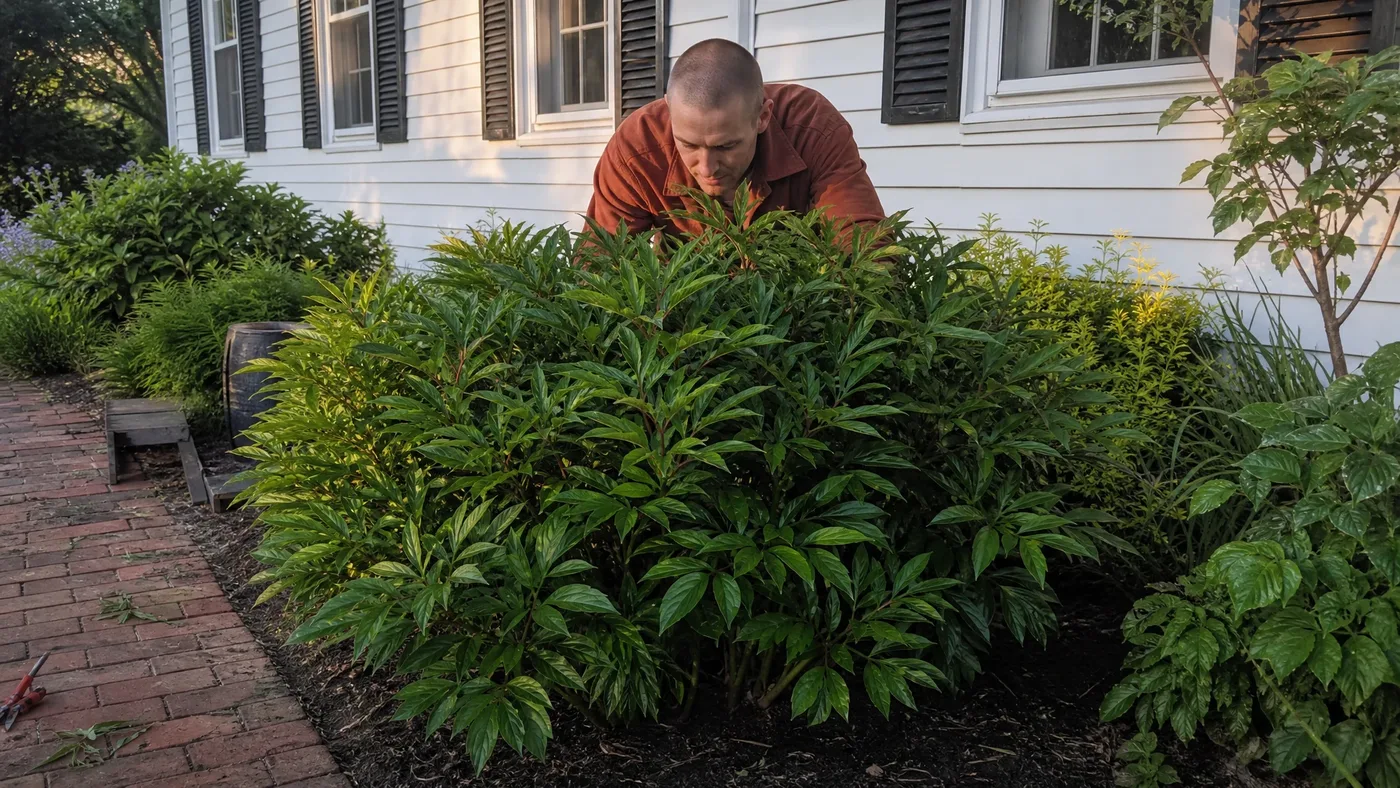
Run your hand over a Sarah Bernhardt in June and the foliage feels like glossy, ruffled silk, deep green and cool in the morning. Then your thumb catches on a single dark freckle, and a few leaves later, another. Left alone, those freckles merge into blotches, the leaves dull and curl, and by August the plant can look scorched just when it should be storing strength for next year's rose-pink double blooms.
We'll walk you through what you're seeing on the leaf, from the first purple freckles to late-summer blackening, then sort out the look-alikes, the wet weather that drives it all, and the fall cleanup that breaks the cycle. Nearly every case is manageable, and a peony that gets this right is a plant you keep for decades.
Small Purple Freckles on Sarah Bernhardt Peony Leaves
Those first freckles are almost always peony leaf blotch, also called red spot or measles, which is caused by the fungus Cladosporium paeoniae. It tends to appear in early summer, often on the lower leaves first, where foliage stays damp longest.
Sarah Bernhardt's dense, ruffled leaves hold moisture well, so the lower and inner parts of the plant are the first places to check.
What the Early Spots Look Like
Early spots are small, round to irregular and glossy, running from reddish purple to brown. They sit on the upper surface of the leaf and stand out against the matte green around them. On the stems, the same fungus draws long reddish-brown streaks, so turn a few stems in your fingers when you find freckles on the leaves. A handful of spots in June does not mean the plant is failing.
Your First Response
Pick off the worst leaves and any streaked stems, and put them in the trash, not on the ground under the plant. Do not strip the plant bare. Healthy leaves feed the roots, and a young Sarah Bernhardt has little foliage to spare. Then photograph the plant and note the date, which leaves are spotted and whether the spots followed a rainy spell. That record points you to the real fix.
Customers usually ask us whether to spray right away. What we tell them is to clean up first and fix the airflow, because a fungicide on a crowded, wet plant solves very little. We cover where a spray fits in the wet-weather section below.
Dark Blotches That Spread Across the Leaf
When freckles stop being freckles, you are looking at the same disease a few weeks on. The spots enlarge, run together and darken from purple-brown toward black, and a glossy sheen often stays on the upper surface. A whole leaf can end up as one dark patch.
In a bad season the blotches climb from the lower leaves up the stem. Sarah Bernhardt's overlapping leaves sit on stems reaching up to about 35 inches, so one infected leaf touches several healthy neighbors.
Telling It Apart From Other Diseases
Three quick checks separate leaf blotch from the other things that darken peony foliage:
- Look at the surface. Leaf blotch spots are glossy and sit on the upper side of the leaf. Powdery mildew is a pale, dusty coating that smears off under your thumb.
- Look at the stems and buds. Gray mold turns stems and buds soft and brown, with fuzzy gray growth in damp weather. Leaf blotch leaves firm reddish-brown streaks on the stems.
- Look at the pattern. Leaf blotch begins as scattered spots that then merge. A leaf that goes dark all over at once, with no spots, points to water or weather stress instead.
We cover gray mold and mildew in our guide to common Sarah Bernhardt pests and diseases. If you still can't tell, take a spotted leaf to your local extension office and ask them to confirm the cause before you treat anything. Glossy, merging blotches on the upper side with reddish stem streaks mean leaf blotch.
Sarah Bernhardt Peony Leaves Turning Black Early
Timing tells you more than color here. Sarah Bernhardt is an herbaceous peony, so the whole top dies back every year, and leaves that yellow, bronze and brown in autumn are doing exactly what they should. Blackening in July or August, while the rest of the plant is still green, is a different story. That is leaf blotch finishing its work, with the plant shedding leaves months ahead of schedule.
What Is Normal
Normal is a gradual, even fade across the whole plant after the weather cools. Leaves go yellow, tan or dull purple-brown, then collapse after frost. A few lower leaves browning during a hot, dry stretch is also ordinary. In neither case do you see glossy spots multiplying week by week.
What Is Not
Spotted foliage that turns black in patches, drops early or leaves bare stems by late summer is not normal. A plant that loses its leaves that early sends less down to its roots. That matters because peonies take 3 to 5 years to establish and reach full production.
A young Sarah Bernhardt cannot afford that loss many summers in a row. Some advice says to cut the whole plant to the ground the moment it looks bad. We'd hold off. Midsummer cutting removes every leaf that is still working, so take only the badly infected ones now and save the full cutback for fall.
Brown Spots With Yellow Halos
A yellow halo can come from several causes, so read the whole spot, not just the ring. Peonies do want at least six hours of direct sunlight, and Sarah Bernhardt handles full sun to partial shade, but it scorches when conditions change fast.
A plant moved from shade into bright sun, or one caught in a dry spell, can crisp at the leaf edges and tips. Scorch starts at the margins on the sunniest side, not as scattered round spots.
Insects leave a different mark, with ragged holes or chewed margins that sometimes dry to a brown rim. Check leaf undersides in the evening before you blame a fungus. If you suspect sun stress, our guide to Sarah Bernhardt's sun requirements will help you judge the site. This table sorts the usual suspects:
| What You See | Likely Cause | First Move |
|---|---|---|
| Glossy purple-brown spots on the upper leaf, merging, with reddish stem streaks | Leaf blotch | Remove the worst leaves, open up airflow, clean up in fall |
| Crisp tan edges and tips on the sunniest side, no spots | Sun scorch or dry soil | Water deeply at the base and check for sudden new exposure |
| Ragged holes or chewed edges with brown rims | Chewing insects | Find the insect before treating anything |
| Soft brown stems or buds with gray fuzz in damp weather | Gray mold | Cut out the affected parts and see our pests guide |
When nothing fits, photograph the leaf and the whole plant before you treat anything.
Spotting Only After Wet Weather
If your peony stays clean through a dry May and breaks out after a week of rain, the fungus is telling you about your garden, not your plant. Spores need damp leaves to take hold and travel in splashing water, so the pattern follows the weather.
Sarah Bernhardt adds its own problem. Its heavy double flowers, about 8 inches across, soak up rain, bend the stems and drag wet foliage toward the soil where splash lands.
Airflow and Spacing
Give every plant room. North Dakota State's extension advises spacing peonies 3 to 4 feet apart, which suits a Sarah Bernhardt that spreads roughly 20 to 39 inches at maturity. Crowded plants stay damp in the center for hours after a shower.
Thin out neighbors that crowd the clump, cut back anything touching it and keep mulch from piling against the stems. We grow ours in open rows with plenty of space between plants for the same reason. Our guide on how big a mature Sarah Bernhardt gets helps you plan the spacing.
Watering and Support
Water at the base, early in the day, and keep the hose off the leaves. Iowa State's advice is to avoid wetting peony foliage when watering is necessary. Our watering guide covers how much. Set a ring or grow-through support in early spring, before the stems flop, so the heavy blooms stay propped and the leaves stay up in the air.
Where Fungicide Fits
Fungicides are only a supplement to sanitation and good cultural practices, never a replacement. If your plant has been hit hard for several summers, ask your local extension service which products are labeled for peonies and when to start in your area, then follow the label exactly. No Sarah Bernhardt is immune to leaf blotch, so the habits matter more than the spray.
Cleaning Up Sarah Bernhardt Peony Foliage in Fall
Cleanup is where you win next June. The fungus survives the winter in infected plant debris, so every spotted leaf left on the ground becomes next spring's starter dose.
Iowa State's guidance is to remove diseased material in fall or early spring, before new shoots emerge. We prefer fall, because it clears one job from the busy weeks of spring. Follow this order:
- Wait until the foliage has died back or frost has knocked it down, so the plant has finished feeding its roots.
- Cut every stem off close to the soil with clean pruners, taking care not to nick the crown. Our guide to pruning and cutting back Sarah Bernhardt shows the cut.
- Rake up fallen leaves and old petals from around the plant, including any caught in the crown.
- Bag everything and put it in the trash.
- Wipe your pruners with rubbing alcohol before you move to the next plant.
What Stays Out of the Compost
Keep every spotted leaf and stem out of the compost. Home piles often don't get hot enough to kill fungal spores, and you would carry them back to the bed with the finished compost. Healthy trimmings from other plants are fine, but peony tops from a spotted year belong in the trash.
In early spring, watch the first red shoots as they push up. Snip off any that carry streaks or spots right away. This costs nothing, and it protects the new leaves far better than a late spray.
Healthy Leaves, Happy Sarah Bernhardt Peony
Black spots on a Sarah Bernhardt are almost always leaf blotch, and the plan is simple. Read the leaf, remove the worst of it, give the plant sun, air and dry foliage, then cut every stem to the ground in fall and keep it out of the compost. Fungicide supports that work and never replaces it.
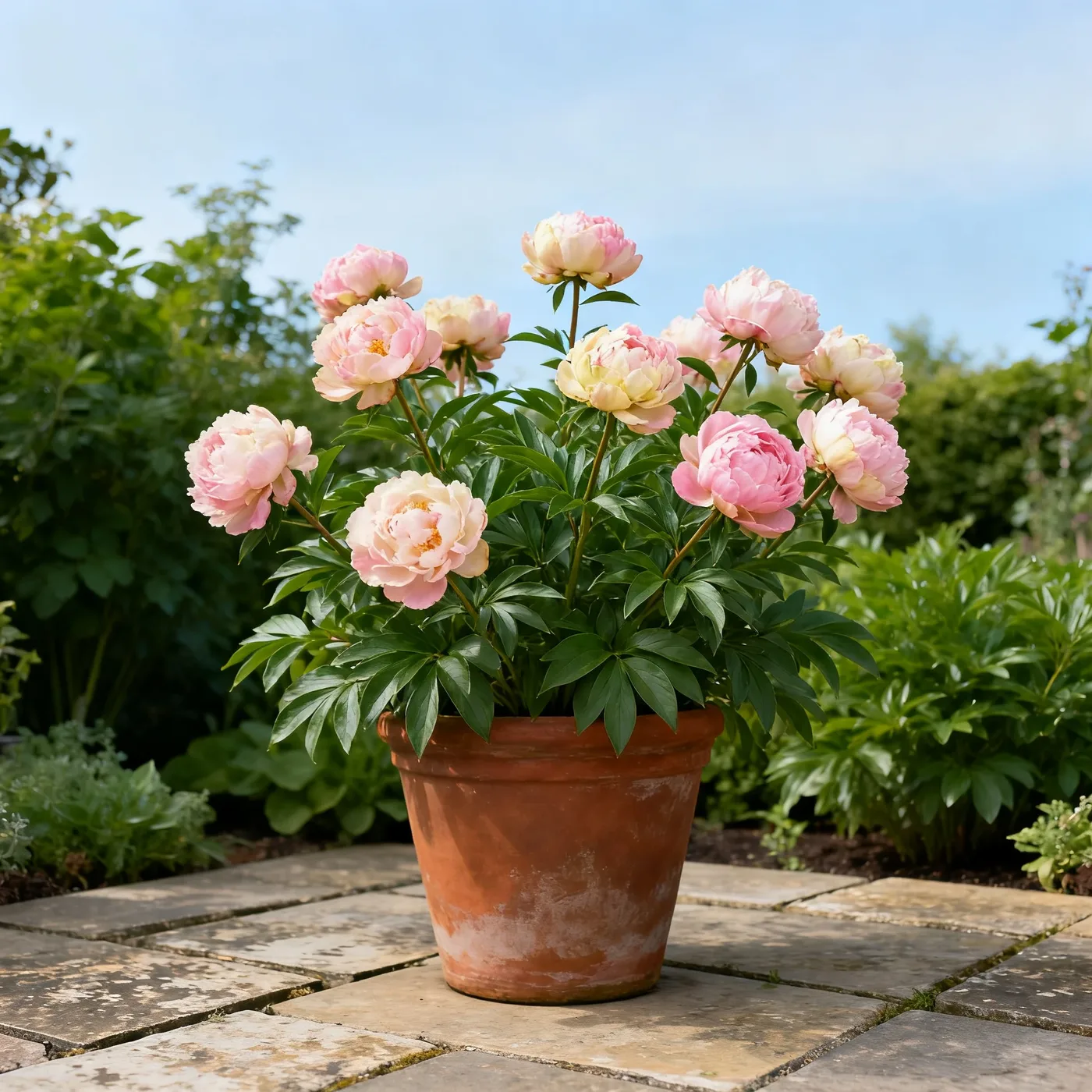
Do this for a season or two and the picture changes. Next June you run your hand over those ruffled leaves and find them smooth, glossy and spotless, a deep green frame for the fragrant rose-pink double blooms you waited years to see.
Sarah Bernhardt Peony
Nursery-grown Sarah Bernhardt Peony in sizes from #2, shipped to your door.
From $74.56
Shop Now →Spacing between plants matters as much as sun to a peony's leaves, so our Sarah Bernhardt stands apart from its neighbors in bright, free-draining ground and the foliage dries fast after rain. The plants are raised and packed by our own growers, who ship only top-quality stock. If clean, glossy leaves are what you're after, choose a Sarah Bernhardt for your own garden.