Do Ants Help Sarah Bernhardt Peony Buds Open and Bloom?
Zero is the number of ants a Sarah Bernhardt Peony bud needs in order to open. You have probably heard otherwise at a garden club, where the line that peonies will not open unless ants crawl over them gets repeated as if it were settled fact.
The belief matters because it changes what people do. Some tolerate crowds of ants on a plant that may have a real insect problem, and others reach for sprays on buds that were never in danger. Getting it right protects a plant you may have waited years to see flower.
Read on for what the ants are after, whether blooms fail without them, what ants do and do not protect against, when heavy traffic points to aphids, and what to do about it.
The Belief That Ants Pry Sarah Bernhardt Peony Buds Open
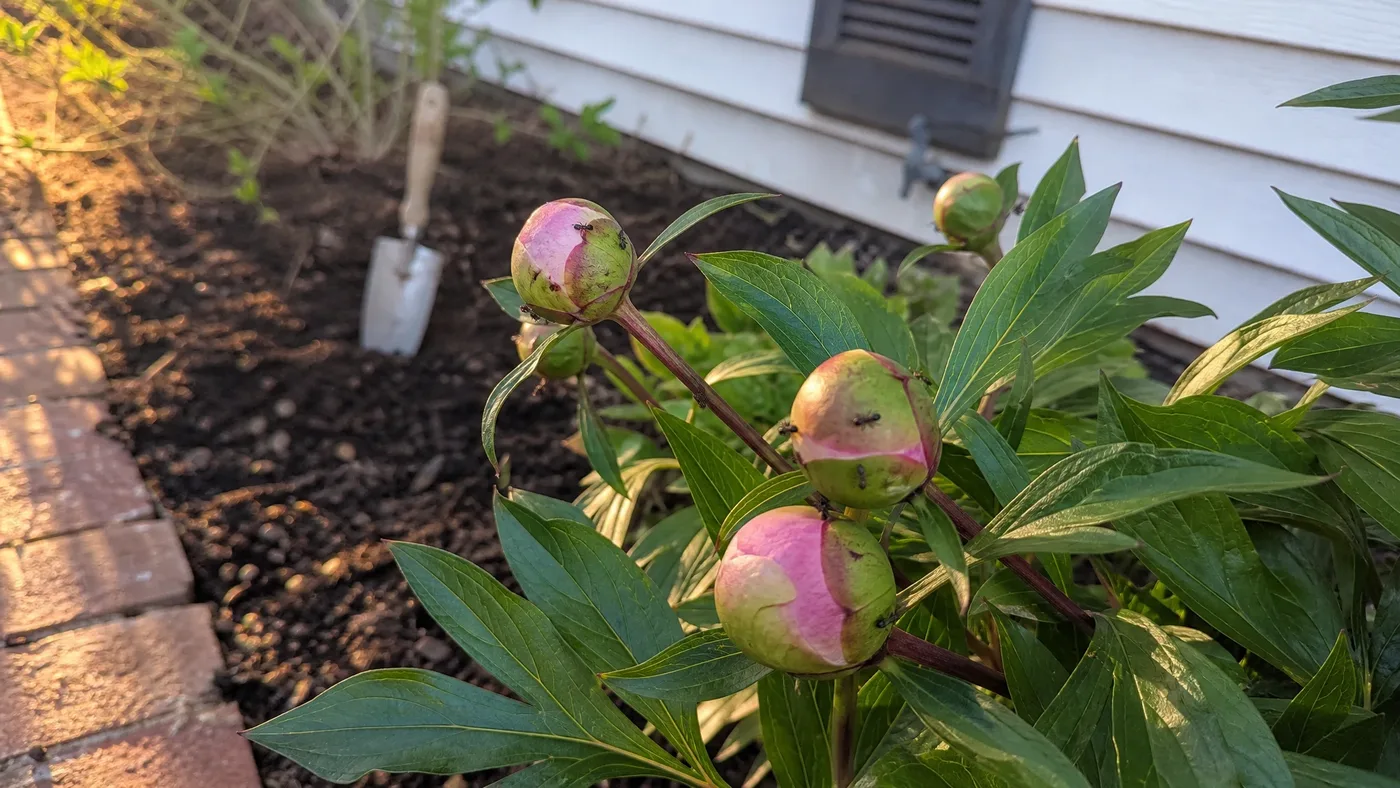
The story goes that a peony bud is sealed tight and the ants chew or pry it open, so no ants means no flowers. It is a tidy tale, and it starts from something real: ants do swarm over the buds just as they swell. The timing is what makes people link the two events.
Timing is not cause, though. Iowa State's yard and garden extension answers the question directly, and peony buds will open without the presence of ants. Nothing in the extension material we rely on describes ants doing any work on the bud itself.
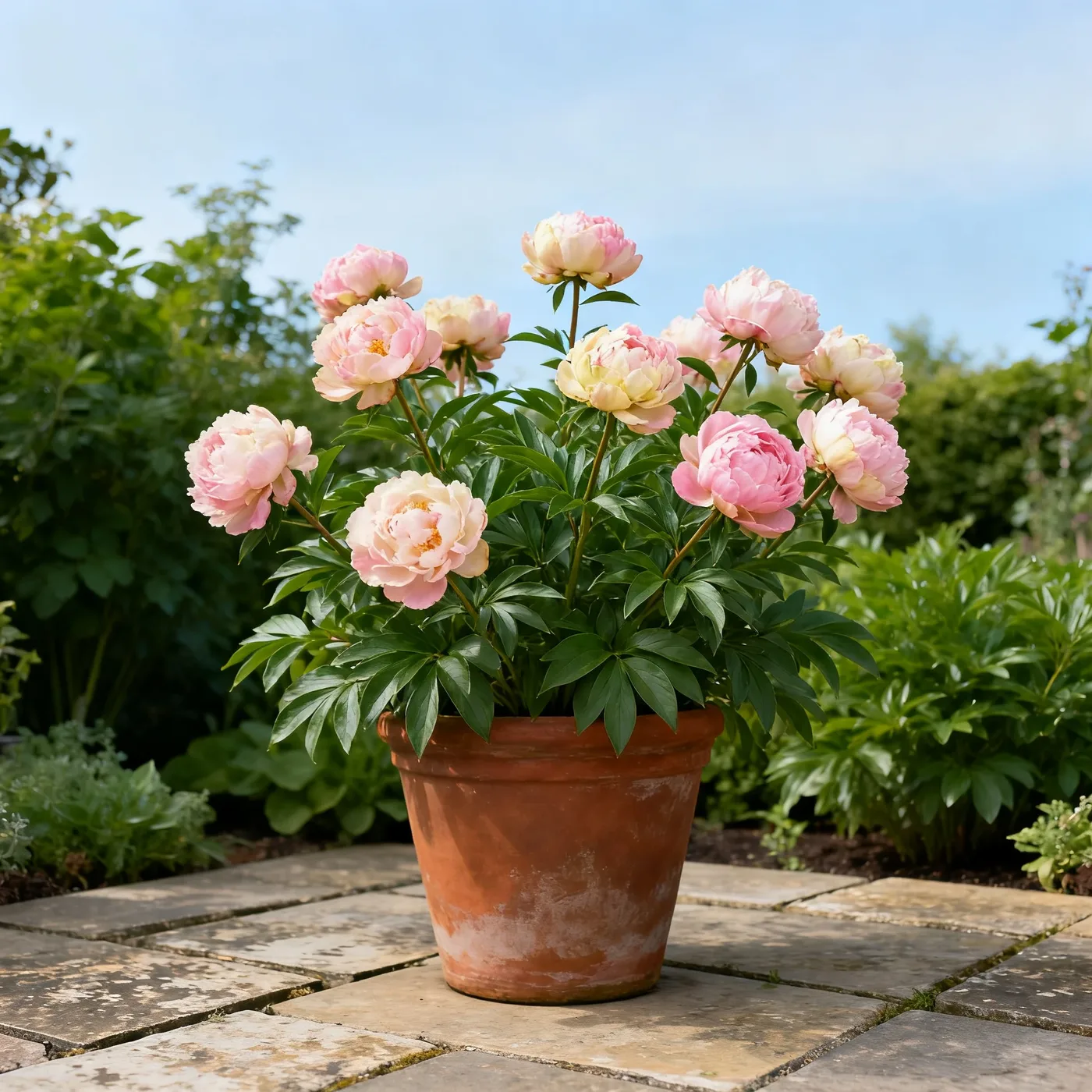
The mechanics also argue against it. A Sarah Bernhardt flower is a rose-pink double that reaches about 8 inches across, so the bud is packed with many layers of petals that expand from the inside. The outer sepals are tough, leaf-like coverings, and an insect a fraction of an inch long has no way to push that bulk apart.
What we tell customers is to treat the ants as a sign that the bud is at a certain stage, not as a cause of anything. They arrive because something on the bud interests them, and the next section explains what.
Why Sarah Bernhardt Peony Buds Wear Nectar Beads
Peony buds make nectar before the flower opens. Illinois Extension explains that peonies have glands called extrafloral nectaries on their sepals, the leaf-like structures that cover the flower before it opens. "Extrafloral" simply means the glands sit outside the flower proper, so this sugar is not a reward for pollinators visiting petals.
The result is a small sticky bead of liquid on the green outer parts of the bud. Iowa State's extension says the ants are attracted to that sugary nectar, and the cause and effect is plain: sugar is food, and ants follow food. Customers usually ask us in late spring why their buds look wet and sticky, and this is the answer.
Because the nectaries are on the sepals, the traffic is concentrated on the buds themselves. On a mature Sarah Bernhardt, which grows to roughly 3 feet, a clump with dozens of large buds can carry a lot of ants at once. That can look alarming, but it only tells you the nectaries are working.
We cannot say from the sources exactly why peonies evolved this trait, and we would be guessing if we claimed to. What matters in the garden is the plain fact that the sugar draws the ants and the ants have no effect on the bud.
Do Sarah Bernhardt Peony Blooms Fail Without Ants?
No. Plants kept free of ants open their buds on the same schedule as plants covered in them. If ants were required, every peony grown indoors, in a high tunnel or in a freshly planted bed without an ant colony nearby would stall, and growers of cut peonies would have noticed long ago.
When a Sarah Bernhardt does not flower, the cause is almost always something about the plant or the site. The long wait is the most common one, since Utah State's cut-flower guide says peonies take 3 to 5 years to establish and come into full production. Our guide to a peony that is not blooming walks through the full list, but these are the usual suspects:
- Too much shade, which Missouri Extension calls a key reason peonies fail to flower, and which the University of Washington also lists as a cause of no buds.
- A young plant that is still building its root system and has not yet put energy into flowers.
- A crown set too deep, which leaves healthy foliage but few or no buds.
- Buds that formed and then dried or rotted before opening, which points to weather or disease and not to a missing insect.
Notice that ants appear nowhere on that list. If your plant has buds with ants on them, the plant is already doing its part, and the ants are a side effect of buds that are developing normally.
The Idea That Ants Guard Against Pests
A second belief says the ants are bodyguards: the plant pays them in nectar and they chase off whatever would eat the buds. This idea has a certain logic, since many plants around the world offer sugar to ants for exactly that reason. The question is whether it is documented for peonies, and the extension sources we use do not report any such protection.
What they do report is that ants are harmless. Wisconsin Extension states that ants are commonly seen on peony blooms and are not a threat to plant health. Utah State's cut-flower guide adds that they do not damage the plant or flower and are considered a nuisance pest.
So the fair summary is that ants neither harm Sarah Bernhardt nor, as far as we can tell, defend it. The diseases that actually threaten peonies, such as the fungal problems covered in our guide to common peony pests and diseases, are not something ants stop. We would not plan your care around ants doing any guarding.
The same goes for larger animals. Deer tend to leave peonies alone because of the plant itself, which has nothing to do with ants, and our deer and rabbit guide covers that separately.
When Ants Point to Aphids on Sarah Bernhardt Peony
There is one situation where ants deserve your attention. Aphids are small, soft-bodied sap-feeding insects, and ants are known to visit aphid colonies. The ants themselves are not the problem, but a lot of ants in the wrong place can be the first clue that something else has moved in.
Reading the Signs
The location of the ants tells you most of what you need. Nectar-driven ants gather on the outside of swelling buds. Aphid-driven ants travel up stems and along new shoots, and you will find small insects clustered where the ants stop. The table below sets the two patterns side by side.
| What you see | Likely cause | What to do |
|---|---|---|
| Ants on the outside of plump buds, nothing else | Nectar on the sepals | Nothing |
| Ants running up stems and shoots | Possibly aphids nearby | Look closely at stem tips and under leaves |
| Clusters of tiny insects on buds or new growth | Aphids | Rinse off or treat |
| Buds that fail to develop where insects cluster | Heavy feeding | Treat promptly and recheck in a few days |
Treating Aphids
Start with the gentlest method. Colorado State Extension notes that exposed aphids can be controlled by insecticides, insecticidal soaps, and sometimes with a strong jet of water. On a peony, that means a firm spray from the hose aimed at the clusters, repeated as needed.
If water is not enough, insecticidal soap is the next step, and you should follow the label exactly. Treat only when you can see aphids, and check with your local extension service for what is advised in your area.
The Habit of Dusting Buds to Clear Ants
Some gardeners dust or spray the buds to get rid of ants, either because they dislike the sight or because they believe the ants will damage the bloom. Neither reason holds up. The ants do no damage, so there is nothing to prevent, and the sticky nectar that attracts them keeps flowing, so they come back.
The cost falls on the plant and the garden around it. Putting a pesticide or powder on tight buds that you are about to enjoy, and possibly cut for the house, is a poor trade for something harmless. Sprays also reach other insects that have done nothing wrong, and open peony blooms are visited by many of them. In our rows, we leave the ants alone.
The one reasonable reason to remove ants is the vase. If you cut Sarah Bernhardt in bud for indoor display, a gentle shake and a quick rinse under cool water clears the hitchhikers without chemicals. Our bloom time and flower color guide covers what to expect from the flowers once they are open.
So the advice to dust ants off buds is one we do not follow. If aphids are present, treat the aphids as described above. If they are not, the ants need no response at all.
What Sarah Bernhardt Peony Buds Do Without Help
A peony bud opens because the plant has stored the energy to do it and the weather turns warm. Cooler spells slow the process and warm spells speed it up, which is why bloom dates shift from year to year. The petals inside expand until the sepals can no longer hold them closed, and no outside help is involved.
Once they open, Sarah Bernhardt flowers are fragrant, rose-pink doubles, and NC State Extension notes that each plant blooms for about two weeks in late spring to early summer. The ants are most active during the bud stage and have no say in that two-week window. Your attention is better spent on the things that do affect it, such as sun and support for the heavy flowers.
That is the settled answer to the title. Buds open on their own, and ants are only drawn to the nectar on them, so ignore the ants unless you also find aphids. The rest of what a healthy plant needs is in our complete care guide.
Leave the Ants Be on Your Sarah Bernhardt Peony
The ants on your buds are there for the sugary nectar on the sepals, and they are harmless visitors. They do not open the buds, a plant without them blooms just the same, and the extension sources we use report no protection from them. The only time they matter is when they point you toward aphids, which you can rinse or treat.
After years of waiting for a first bloom, it is easy to worry over every sign on the plant. In this case you can relax, since the buds open on warmth and time alone, and you are free to leave the ants be.
Sarah Bernhardt Peony
Nursery-grown Sarah Bernhardt Peony in sizes from #2, shipped to your door.
From $74.56
Shop Now →Sarah Bernhardt does its best where the light is strong and the ground sheds water quickly, so that is how we site it in our rows, and we check each plant for aphids before it goes out. Because we are a grower-run shop of modest size, nothing leaves here unless we would put it in our own beds. Come and see which peonies we have ready, and enjoy watching those buds swell with ants or without them.