Is Sarah Bernhardt a Herbaceous, Tree or Itoh Peony?
In our rows this season, we watched a shopper stand between three pots with three very different price tags, all labeled simply "peony." The question that followed is one we hear often: which of these is Sarah Bernhardt, the cheap one, the pricey one or the one in the middle?
The answer matters for your budget and for the next ten years of your garden. Buy a tree peony by mistake and you are suddenly caring for woody stems you never planned for. Pay Itoh prices for a plant you thought was Sarah Bernhardt and you have spent extra on a different plant.
In this article, we'll go through how each type grows from the roots up, what each one costs in money and in years, and how to check a label before you pay.
How a Sarah Bernhardt Peony Grows From Its Roots
Sarah Bernhardt is a cultivar of Paeonia lactiflora, the species behind the classic garden peony, and nearly everything about it starts underground. The roots are thick and fleshy, and they store the energy the plant needs to push up a full clump each spring. Small buds called eyes sit on the crown, where the roots meet the base of the stems.
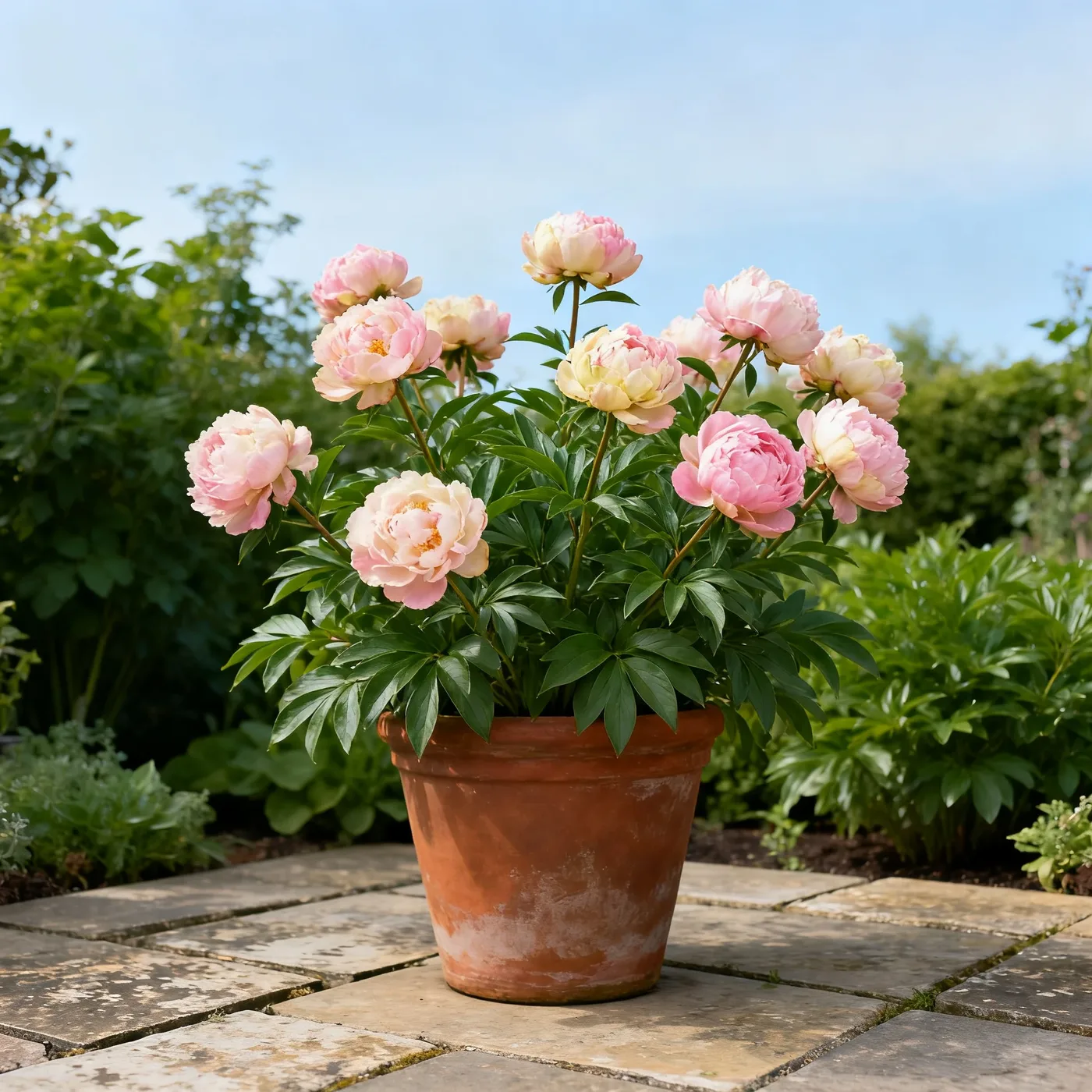
Each year runs the same cycle. In early spring, pointed red-pink shoots rise from the eyes, open into a leafy mound and carry the buds that flower in late spring to early summer. The blooms on this cultivar are double, rose-pink and fragrant, around 8 inches across.
After the flowers fade, the leaves keep working all summer to refill the roots for next year. That is why the plant is slow to start. The cultivar takes roughly 2 to 5 years to reach maturity, and extension growers note that peonies take 3 to 5 years to establish and come into full production.
Because the roots do the heavy lifting, a clump needs room and patience more than attention. A mature plant reaches up to about 35 inches tall with a spread of roughly 20 to 39 inches, which our guide on how big a mature Sarah Bernhardt gets covers in more detail.
Why Herbaceous Stems Die Back Every Winter
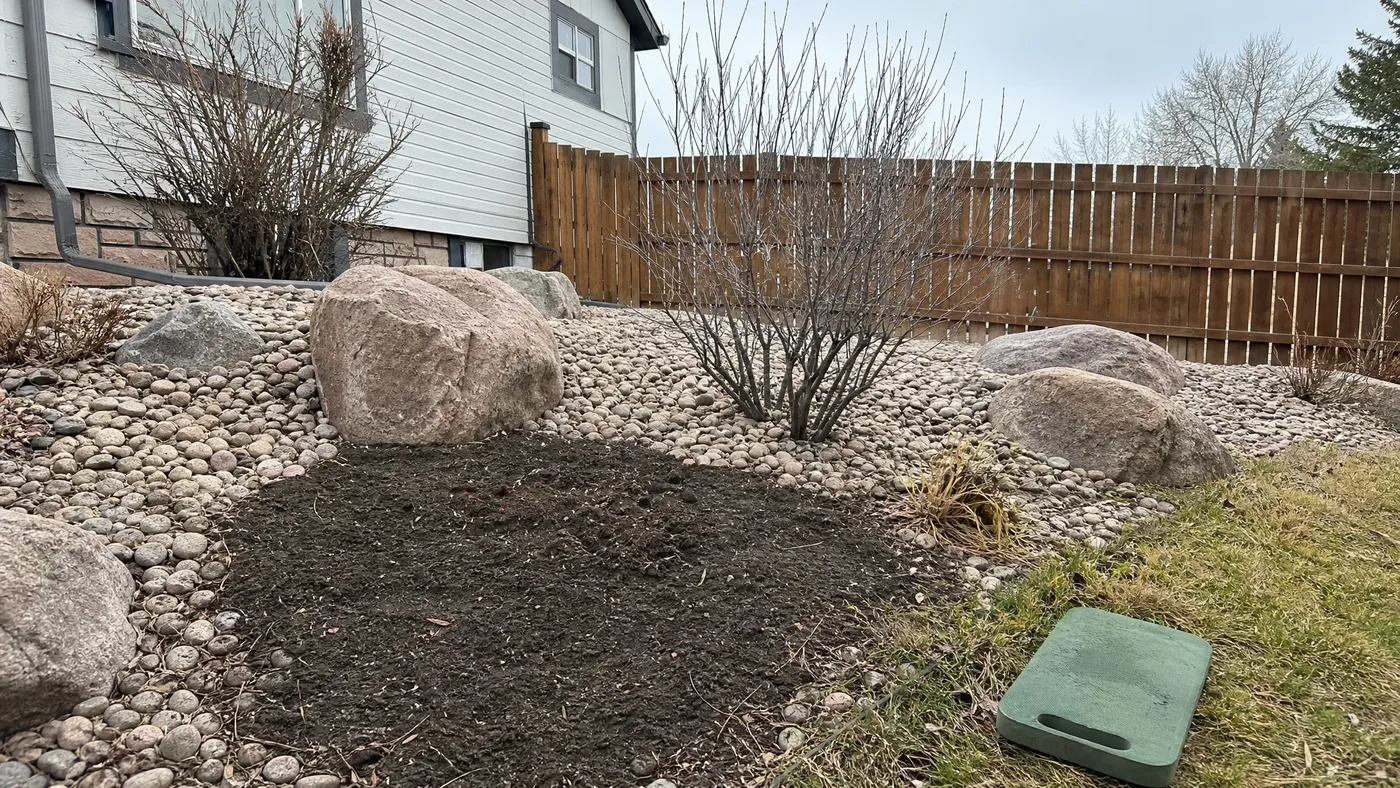
Herbaceous means the stems are soft rather than woody, so they cannot carry living tissue through a hard winter. Extension horticulturists describe P. lactiflora as the most common peony, one that forms bushy mounds that die back to the ground in winter. The crown and its eyes stay alive just under the soil, and that is where the plant waits out the cold.
Fall Cleanup Is Simple
Once frost has browned the foliage, cut every stem down to ground level and clear the debris away. We tell customers to bin it rather than compost it, since old peony leaves can carry disease into next year. Our guide to pruning and cutting back Sarah Bernhardt covers the timing.
Leave green foliage alone through summer. Cutting it early starves the roots, and the plant answers with fewer flowers the next spring.
What Winter Looks Like Over the Years
Expect bare soil from late fall until the new shoots appear. That empty patch is normal and not a sign the plant has died, so mark the spot with a stake before the ground goes bare.
Sarah Bernhardt is hardy in zones 3 to 8, and the cultivar's hardiness rating covers temperatures down to roughly –4°F. Cold winters suit it, and our hardiness zone guide goes deeper on local climate.
Tree Peonies Build Woody Stems Above Ground
Tree peonies work on a different plan. Extension specialists point out that, unlike other peony types, they produce woody stems that survive above the ground over the winter. Those stems stay in place year after year and thicken into a framework, much like a small shrub.
That framework changes how you handle them. The woody stems are kept year-round to carry next year's growth, so pruning is light and limited to dead or damaged wood. Fall advice to cut peonies to the ground applies only to herbaceous types. Apply it to a tree peony and you cut off next year's flowers.
Size changes too. Tree peonies can grow 3 to 7 feet tall, while herbaceous varieties grow 2 to 4 feet. A tree peony is a shrub in your border, and you need to plan space for it the way you would for any shrub.
Cost follows the wood. A plant that builds a woody framework takes longer to grow to a saleable size, and that time shows up on the price tag. For a gardener who wants a permanent shrub among the perennials, that can be a fair trade, but it is a different purchase from Sarah Bernhardt.
Itoh Hybrids Sit Between the Two Parents
Itoh peonies, also called intersectional peonies, come from crossing a herbaceous peony with a tree peony. University extension sources describe them as having short woody stems that die back to the ground in winter, which is why they behave like herbaceous peonies in the cold months.
You will usually see a sturdier, bushier plant than a plain herbaceous clump, with some of the tree peony's character carried into summer. Like Sarah Bernhardt, Itoh hybrids prefer full sun, so the site you choose for one works for the other.
The cross is also why Itoh plants carry a higher price than herbaceous peonies. You are paying for a hybrid, and each named Itoh is its own cultivar with its own name. Sarah Bernhardt is a straight P. lactiflora cultivar, not a cross of any kind.
The confusion comes from the winter picture. Both types vanish to the ground, both are sold as "peony" in a pot, and a shopper cannot tell them apart from the bare soil alone. That is exactly why the label matters more than the look of the plant.
What the Label Means for Your Sarah Bernhardt Peony Budget
Think of any peony as a multi-year purchase. You pay once, wait several seasons and then collect flowers for decades, so the useful comparison is cost against the years of waiting. The table below sets the three types side by side.
| Type | What Winter Leaves | Height Range | Relative Price |
|---|---|---|---|
| Herbaceous (Sarah Bernhardt) | Bare soil, stems cut to the ground | 2–4 feet, cultivar up to about 35 inches | Lowest of the three |
| Tree peony | Woody stems stay standing | 3–7 feet | Higher |
| Itoh hybrid | Short woody stems die back | Check the tag | Higher |
All three ask for patience, since peonies in general take 3 to 5 years to reach full production. The waiting time is similar, so the price difference is the real variable. A lower price per plant means you can afford several clumps for the same money, set 3 to 4 feet apart.
Our own pick is plain. For most gardens, we would choose the herbaceous Sarah Bernhardt, because it delivers a classic fragrant bloom at the lowest cost and asks nothing unusual of you. We would send a gardener toward a tree peony only if they want a woody shrub and have the space and budget for one.
Itoh hybrids suit the gardener who specifically wants that bushier form and is happy to pay for it. If your goal is the old-fashioned cottage garden peony, the extra spending on Itoh buys you something other than Sarah Bernhardt.
Telling Sarah Bernhardt Peony Apart at the Nursery
One of the most common questions customers ask us is whether a bare pot in early spring is dead. It almost never is, but a bare pot is also exactly where mix-ups happen, so a few quick checks are worth making before you pay.
- Read the botanical name on the tag. You want Paeonia lactiflora 'Sarah Bernhardt'. A tag that says tree peony, Paeonia suffruticosa, Itoh or intersectional describes a different plant.
- Check the price against the label. If a pot called Sarah Bernhardt is priced like a shrub, ask what you are actually buying before you carry it to the register.
- Look at the pot in winter and early spring. A branching, bark-covered framework above the soil points to a tree peony, while pointed red-pink shoots or bare soil point to a herbaceous type. Itoh looks similar to herbaceous at this stage, so rely on the tag.
- If the plant is bare root, look for thick, fleshy roots with eyes on the crown. That is how a herbaceous lactiflora is supposed to look.
Photograph the tag before you leave, since labels fade and get lost over the years. Our guide to buying Sarah Bernhardt as bare root or potted explains what to expect from each form.
A Sarah Bernhardt Peony Is Herbaceous, Plain and Simple
To settle it: Sarah Bernhardt is a herbaceous Paeonia lactiflora. It is not a tree peony and it is not an Itoh hybrid. It has no woody framework, it dies to the ground every winter and it grows from fleshy storage roots, exactly as the first section described.
That classification tells you how to plant it. Give it full sun, since the cultivar tolerates some shade but flowers best with plenty of direct light, and set it where the soil drains well. It copes with acid, alkaline or neutral ground and with clay, loam, chalk or sand. Keep the eyes near the surface, because planting too deep is a common reason for missing blooms, as our planting guide explains.
It also tells you how to keep it. Cut it to the ground each fall, support the heavy double blooms if they flop and leave the clump undisturbed for years. Tree peony routines do not apply here, so you can ignore them.
Plan Your Sarah Bernhardt Peony Once
The label sorts the whole decision. Herbaceous plants die back and regrow from the roots, tree peonies keep woody stems and cost more, and Itoh hybrids sit between the two at a higher price. Sarah Bernhardt is in the first group, so you handle it the herbaceous way and budget for it that way.
Spend a little time at the nursery reading the tag, then plant it and let it settle in. One inexpensive, long-lived herbaceous plant that needs no special treatment will repay a few patient seasons with fragrant rose-pink flowers for years to come.
Sarah Bernhardt Peony
Nursery-grown Sarah Bernhardt Peony in sizes from #2, shipped to your door.
From $74.56
Shop Now →Sarah Bernhardt grows best in sunny, open ground that drains freely, so that is where we plant it, in rows on our farms with the fleshy roots and eyes left whole. Every tree, shrub, grass and plant we sell is raised there too, and we put only top-quality stock in the pot. Look through what is in stock right now and choose the herbaceous peony that fits your garden.