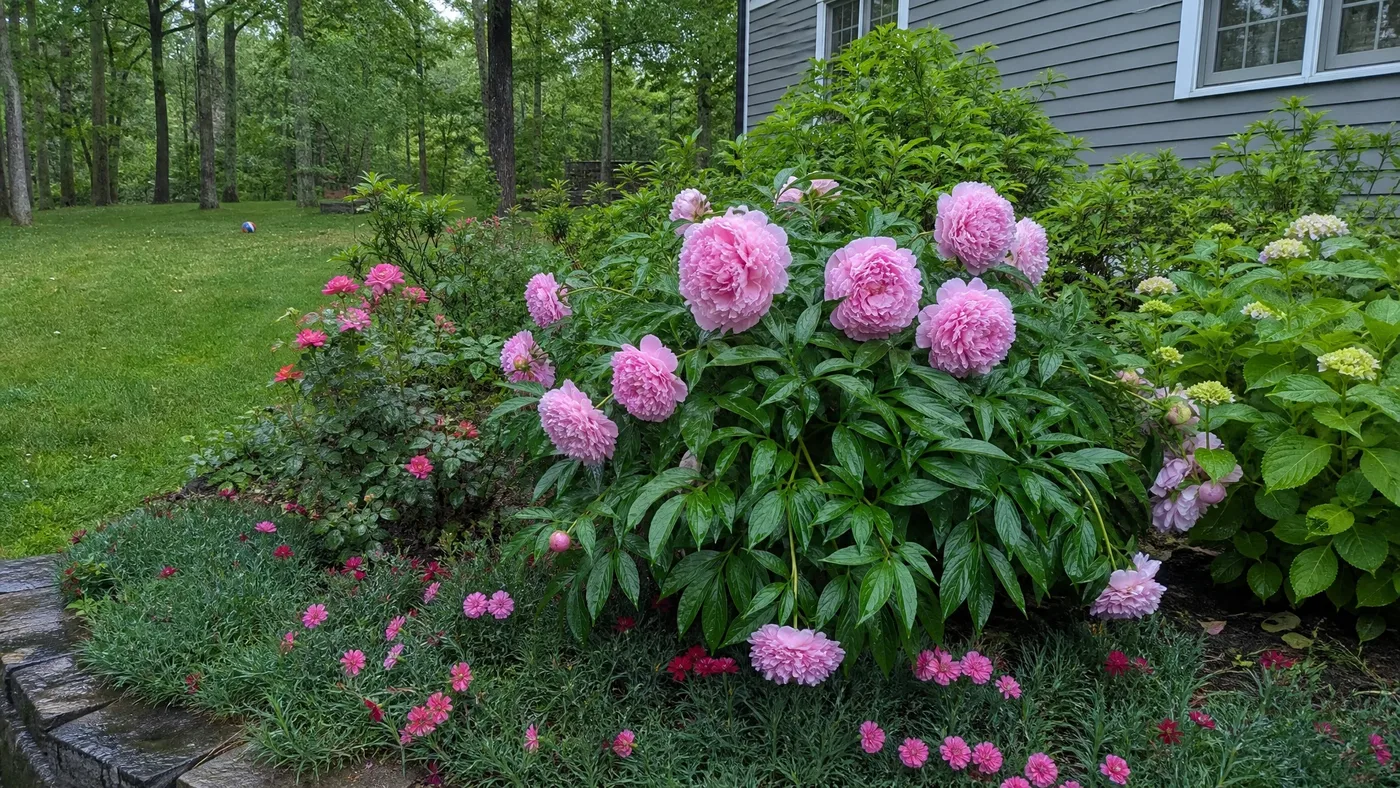
Sarah Bernhardt Peony vs Roses, Hydrangeas and Carnations
Lay the May-to-October garden out like a shipping calendar and every flower gets a slot. Sarah Bernhardt peony books the first June week and holds it for about two weeks. Roses follow and keep shipping into fall. Hydrangeas carry the summer middle, and carnations turn up wherever a bouquet is being built. Pick the wrong slot and you get a bed that sits empty in August, or a peony you resent for being brief.
This article talks about how Sarah Bernhardt peony stacks up against roses, hydrangeas and carnations in the garden and in the vase, and answers the questions customers ask us most. Read on to learn when each one blooms, how big each grows, how a cut stem travels, and how a single bloom compares on size, color and fragrance.
Reading the Garden Season by Season
Start with the calendar, because it decides everything else. A Sarah Bernhardt peony plant blooms for about two weeks in late spring to early summer, and we plan around the first June week. After that it is a clean mound of foliage, which is a good thing to have in a border but not a flower. If you want color in every month, the peony cannot be your only plant.
Roses run the longest. A hybrid tea such as 'Mister Lincoln' is fully double and repeat blooms from summer to fall, and NC State lists it as hardy in zones 5–9. Bigleaf hydrangeas are summer shrubs that fill the middle of the season. Carnations are the filler line, used all season long in bouquets.
This table puts the four on one calendar and shows what each leaves you with outside its slot.
| Flower | Its slot in the season | What you see outside it |
|---|---|---|
| Sarah Bernhardt peony | About two weeks, late spring to early summer | A foliage mound, no bloom |
| Hybrid tea rose | Repeat bloom, summer to fall | A woody frame through the cold months |
| Bigleaf hydrangea | Summer, as a shrub show | Woody stems and large leaves |
| Carnation | A steady presence in cut bouquets | Narrow leaves low in the border |
The peony slot also carries a hazard. A hard freeze in May may damage or destroy the flower buds, so a cold snap at the wrong week can cost you the whole year's show. Roses and hydrangeas have more weeks to recover, and the peony has only one. The peony is the sprint and the rose is the marathon.
Filling the Gaps Around the Peony
Most customers who ask us this question already own a rose or a hydrangea and want to know where the peony fits. Our answer is to plan the bed in the order the flowers arrive:
- Put the peony in your sunniest spot first, where you can see it from a window, because too much shade is a leading reason peonies fail to flower.
- Add a repeat-blooming rose beside it, so the bed keeps producing after the peony finishes in June.
- Set a hydrangea behind both if you garden in zone 6 or warmer, so the summer middle has a big shape to look at.
- Edge the front with carnations if you want a ready supply of filler for vases.
Do this and no week of the season is empty, and the peony still gets the starring weeks it earns.
Where Sarah Bernhardt Peony Sits Among Shrubs and Perennials
Now place each plant in the ground. A Sarah Bernhardt peony grows 2.5–3 feet tall and wide, and the cultivar tops out around 35 inches, which is shorter than the 2–4 feet quoted for peonies as a species. Plan your bed for the lower figure. It dies back to the ground each winter, wants 3–4 feet from its neighbors, and is hardy in zones 3–8, down to about minus 4°F.
Roses and Hydrangeas as Shrubs
Both are woody and both outgrow the peony. Roses run 2 to 6 feet tall depending on type, and bigleaf hydrangea reaches 3 to 6 feet tall and wide. Cold is the bigger split. Bigleaf hydrangea is hardy to zone 6, so in zones 3 to 5 the peony is the surer choice by a wide margin.
In a mixed bed, a hydrangea is a wall and a peony is a mound. Put the peony in front of the shrub and it covers the bare lower stems in June, then stays tidy while the hydrangea takes over.
Soil is the second split. Roses want full sun and well-drained, moist soil, and a hydrangea decides its flower color by what the soil is doing. Sarah Bernhardt grows in chalk, clay, loam or sand and tolerates acid, alkaline or neutral soil, so it is the easiest of the three to site in a yard you have not amended.
Carnations and Peony in the Border
Carnations are the smaller perennial in this lineup, from about 1 foot up to 3 to 4 feet for the tall florist types. That puts a tall carnation at the same height as a peony, but it never builds the mass. A peony wants at least six hours of direct sun, though this cultivar accepts partial shade, and deer shun it. We lay out more combinations in our landscape ideas for Sarah Bernhardt peony gardens.
One honest note on habit. A heavy double bloom bends the stems after rain, so a peony needs support in a way a hydrangea or a rose usually does not. Our staking guide covers the options. The trade is a fair one, because peonies are long-lived, easy to grow and reliable once they settle in, and a rose bed usually asks for more attention year to year.
Bouquet Duty, From Cutting to Vase Life
A bouquet buyer meets a flower in a fixed order: the cut, the trip, the vase. The peony behaves differently from the other three at every step, so we walk through them in that order.
At the Cut
Roses let you cut again and again because they repeat bloom into fall. Carnations are used a lot in cut bouquets, which is why they are everywhere. A peony plant gives you one flush a year, so you cut once. Young plants take 3 to 5 years to establish and come into full production, and the cultivar takes 2–5 years to reach maturity.
One of the most common questions we get is whether you can cut a first-year plant. We tell customers to leave it alone and let the foliage feed the roots. Once the plant is established, take only a portion of the stems and leave enough leaves behind to keep the crown healthy for next year.
On the Road and in the Vase
Peony stems travel best as buds, and the order we follow is simple:
- Cut when the bud shows color and feels soft, like a marshmallow, not when it is fully open.
- Strip the lower leaves so none sit below the water line.
- Carry the stems upright and out of the sun to wherever the vase is.
- Give them fresh water and let the buds open into the full double bloom.
Hydrangea heads are thirsty and flag quickly, while roses and carnations are more forgiving of rough handling. A peony asks for more care at the cut and gives back the largest flower in the vase.
Think about the household too. The ASPCA lists peony as toxic to dogs and cats, and the cultivar is flagged as a skin irritant to both, so set the vase where pets cannot reach it. Our sources say nothing on pet safety for the other three, so check before you assume any bouquet is safe around animals.
One Stem Up Close Against Three Rivals
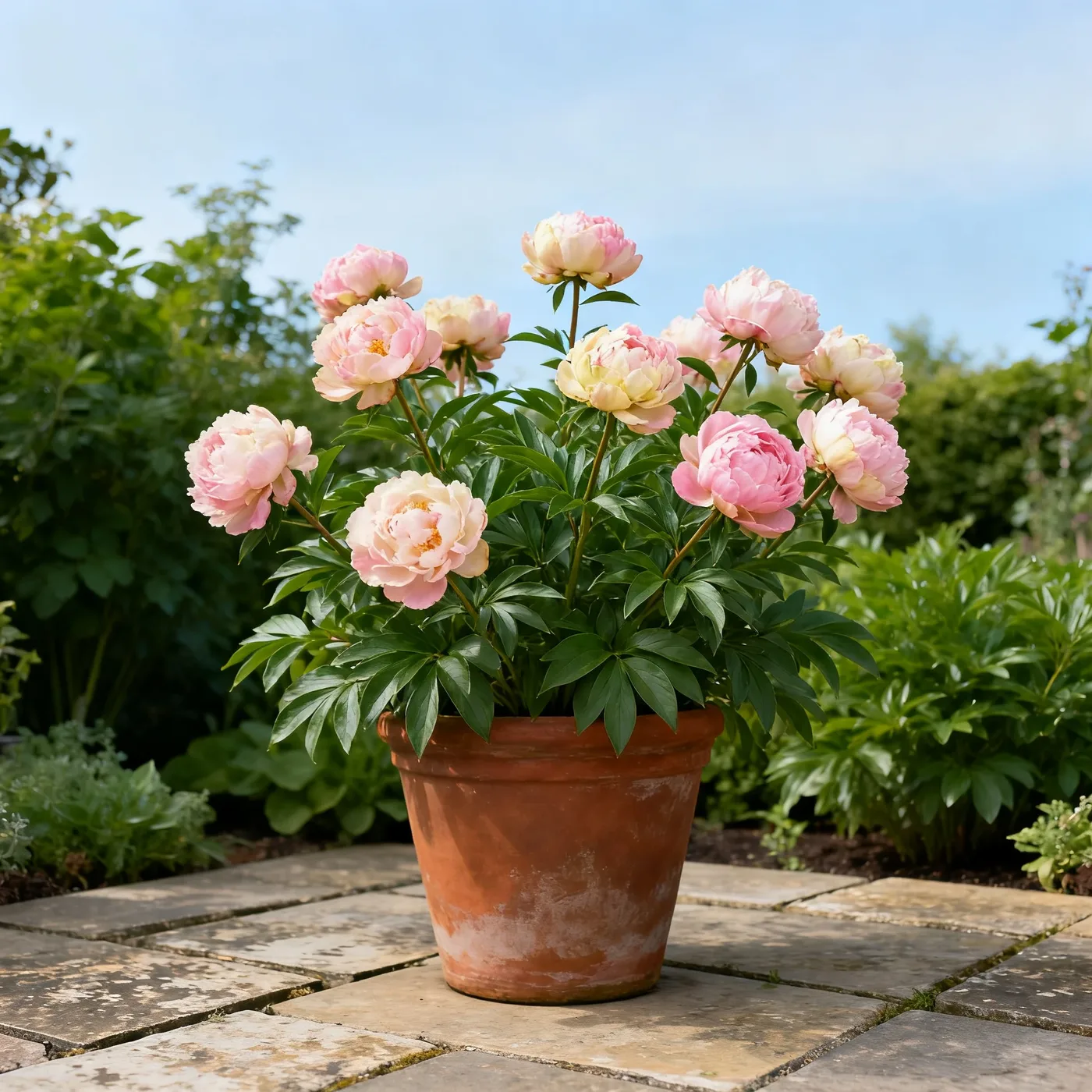
Hold one stem of each and the differences are plain. Sarah Bernhardt carries a fragrant, rose-pink double flower about 8 inches across, which is large for a single stem. The species ranges across pink, white, red, purple and more, but this cultivar is always the same rose-pink double, and that predictability is part of its value in a bouquet.
This table sets one bloom of each side by side on size, form and color.
| Flower | Bloom size and form | Color |
|---|---|---|
| Sarah Bernhardt peony | About 8 inches across, fully double | Rose-pink, fixed |
| Hybrid tea rose ('Mister Lincoln') | Fully double, velvety | Bright red that does not fade |
| Bigleaf hydrangea | Large head of many small florets | Blue in acidic soil, pink in alkaline |
| Carnation | Small, ruffled bloom on a slim stem | Sold in many colors |
Color is where the hydrangea gives you a decision to make and the peony does not. Blue flowers develop in acidic soil and pink in alkaline soil, so your soil sets the outcome. Sarah Bernhardt tolerates acid, alkaline or neutral soil and still blooms rose-pink. Our bloom time and flower color guide goes deeper on what to expect.
Form matters as much as color. A hydrangea gives you volume with many small florets, and a peony gives you one big bloom that reads as a single object from across a room. A rose gives you a tidy, structured flower that suits a formal arrangement, and a carnation gives you a ruffled edge that fills spaces between larger blooms.
Which is better depends on whether you want one stem to carry a vase or ten to fill it. For a single statement stem on a table, we would reach for the peony. For a mixed arrangement that needs bulk, the hydrangea does more work per stem.
Petal Count and Fragrance in a Sarah Bernhardt Peony Bud
Look closer, at the bud. A Sarah Bernhardt bud is a tight green ball, and ants often crawl over it to reach the sap. They do not damage the plant or the flower, and they are considered a nuisance rather than a pest. Inside is a double flower with so many layered petals that nobody counts them without taking the bloom apart. Rose petals pack in a similar way, but the peony does it at a larger scale.
Fragrance is the other half of the comparison. Sarah Bernhardt flowers are fragrant, and a few cut stems scent a whole room in June. 'Mister Lincoln' is also fragrant, and carnations carry a spicy, clove-like scent. Hydrangeas are grown for color and mass, not perfume. Our fragrance guide covers what to expect from the peony in more detail.
The difference is in how long the scent lasts. A rose or a carnation can perfume a room for months across the season, while the peony gives you a strong dose over a short window. If scent matters most to you, the peony is a concentrated June pleasure and the rose is a long, steady one.
The bud that decides next June is underground. Peony buds belong 1 to 2 inches below the soil surface, and planting deeper gives you leaves with few flowers. In our rows, planting depth is the first thing we check when a customer says a plant has not bloomed. We cover the steps in how to plant Sarah Bernhardt peony for big spring blooms.
Sarah Bernhardt Peony Picked for Its Few Perfect Weeks
Here is our position. If you want flowers from May to October, plant roses, and if you want a big summer shrub in zone 6 or warmer, plant a hydrangea. If you want one unforgettable bouquet crop every June from a plant that lasts for decades, plant Sarah Bernhardt. The brief season is the cost, and the fragrant double bloom, the cold hardiness and the long life are what it buys.
Gardeners in zones 3 to 5 have the easiest call, since the peony is hardy there and bigleaf hydrangea is not. The wait for the first full show is real, so plan on a few years of patience before the plant reaches its best. The order is plain: plant in fall, wait for the first June week, then cut.
Sarah Bernhardt Peony
Nursery-grown Sarah Bernhardt Peony in sizes from #2, shipped to your door.
From $74.56
Shop Now →Out on the farm, our Sarah Bernhardt peonies get full sun and soil that drains freely, which is just what the comparison with roses, hydrangeas and carnations asks of a bed. Our own growers raise and pack every top-quality plant we ship, peonies included. If one big June bloom from a plant that stays for decades sounds right to you, we would be glad to send you one of ours.