Sarah Bernhardt Peony vs Shirley Temple Peony Compared
"I want the pink one." We hear that on the phone every spring, and the dry answer from the shed is that two different pinks are sitting on the bench, and one of them spends its first year doing nothing at all. Sarah Bernhardt is the rose-pink double with the big perfume. Shirley Temple is the blush-white double with a lighter scent and a slower start.
This guide covers everything you need to know about choosing between them, from the day the bare roots arrive to the second June when both are in bloom. Pick badly and you spend a year staring at bare dirt, wondering what you did wrong. Pick well and you plant once, then cut armloads of flowers for decades.
Pick a Sarah Bernhardt Peony or Shirley Temple First
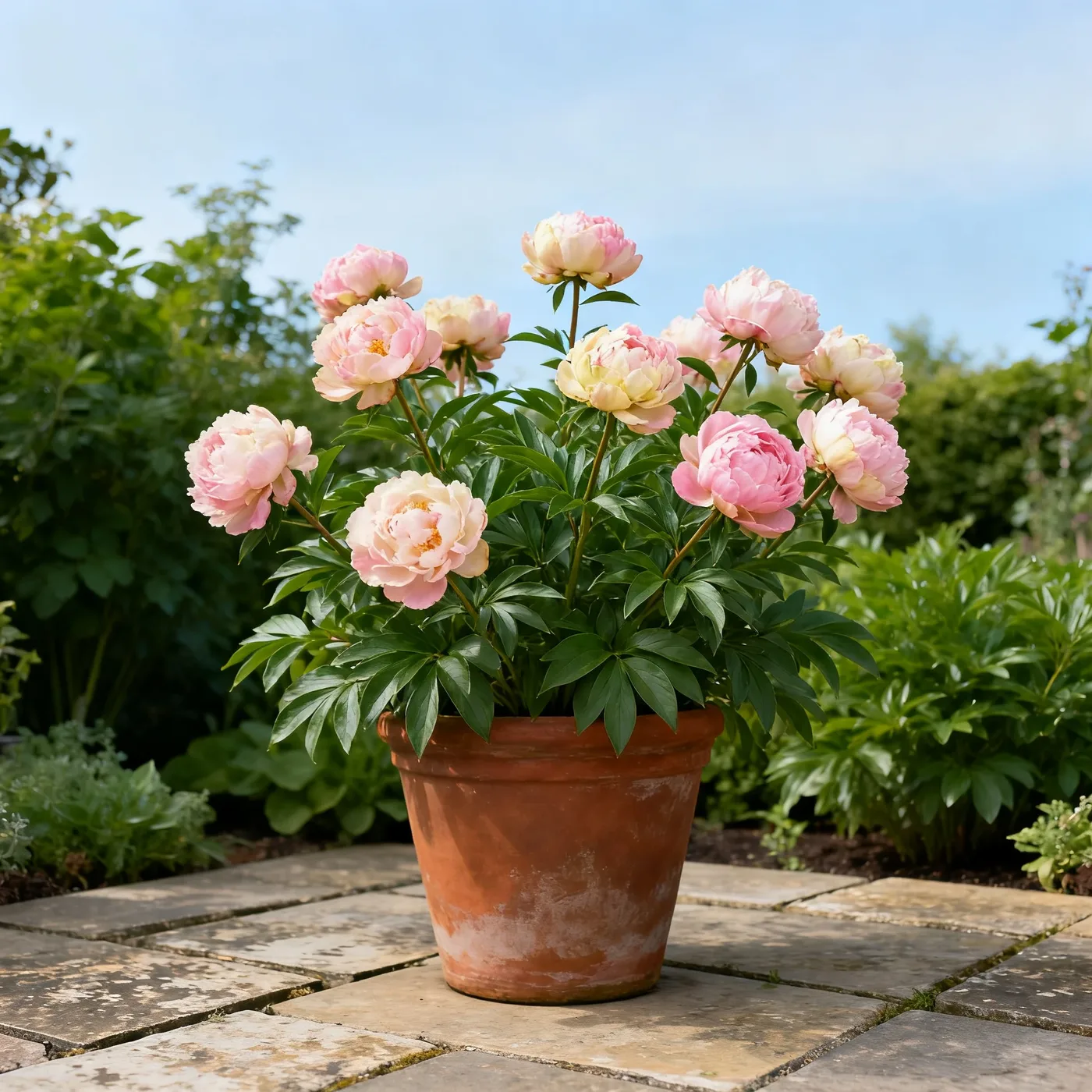
Most of this decision gets made at the order screen, long before either plant has a leaf. A bare root carries no flower to judge, so you choose from a description and a photograph and then wait. Sarah Bernhardt has fragrant, rose-pink double flowers about 8 inches across on a plant that reaches roughly 35 inches. Shirley Temple is the paler, blush-white double with a lighter perfume.
Both are Paeonia lactiflora, both are cottage-garden doubles, and both want the same sun and soil. The real difference is tempo. Peonies of any kind take 3 to 5 years to establish and come into full production, and Sarah Bernhardt is the one that gets there sooner. Shirley Temple establishes later, so its first season is mostly roots working underground.
Better to know that on order day than to find out in June, standing over a clump with no buds and a growing suspicion that you killed it. The usual advice is to buy the biggest division you can find and expect flowers fast. What we tell customers is to pick the cultivar you will still want in thirty years, then give it the wait.
Past that, neither plant is fussy about where it lives. Sarah Bernhardt is hardy in zones 3 to 8, takes full sun to partial shade, and grows in clay, loam, chalk or sand. Check Shirley Temple's own rating on its tag before you put it somewhere cold.
What Arrives in the Box and Why It Looks Dead
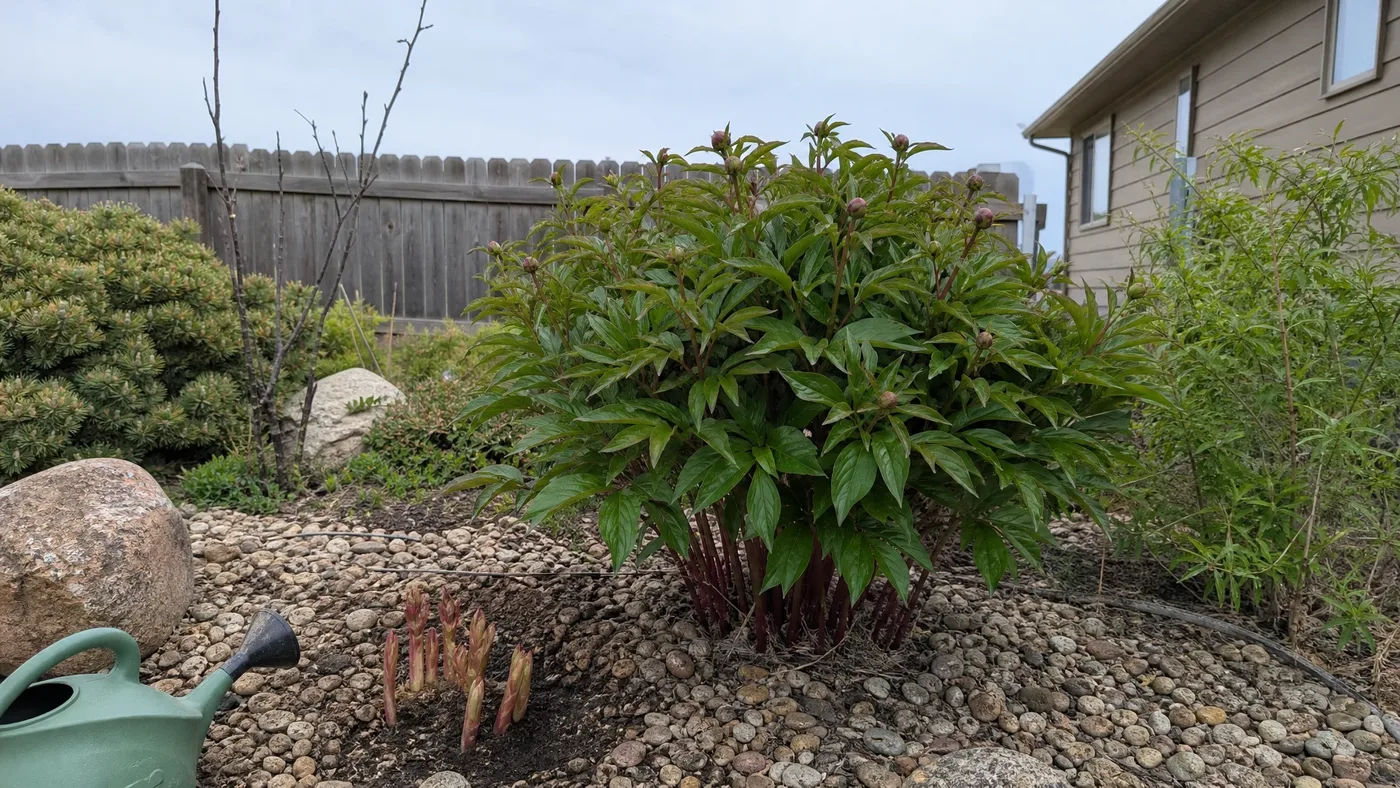
Open the box the day it lands. Inside you will find a few brown, fleshy roots and, on the crown, a handful of small pink or red knobs. No leaves, no stem, no green anywhere, and that is exactly how a dormant peony should look. Our roots go out firm and dormant, so what you see in the box is what we meant you to see.
Reading the Eyes
Those knobs are the eyes, and every one is next year's stem. Sarah Bernhardt and Shirley Temple roots look alike at this stage, and you cannot tell the pink from the blush by staring at them. Label each root before you open the second bag. Two unlabeled brown roots on a potting bench stay a coin toss until they flower, which is a long time to wait for an answer.
What Healthy Looks Like
Judge each root against the same short list, whichever cultivar it is:
- The roots feel firm and fleshy, not rubbery, hollow or dried to a twig.
- The crown carries a few plump eyes, pink or red, not shriveled or blackened.
- There are no mushy patches and no sour smell anywhere on the root.
A small division with firm roots and sound eyes beats a big floppy one every time. If one cultivar arrives with fewer eyes than the other, that tells you about that division, not the plant. Our guide to bare root versus potted plants covers when a pot is the better buy.
Holding Roots Until the Bed Is Ready
If the ground is frozen or soaked, do not force the planting. Keep the roots somewhere cool and dark in their packing, slightly damp but never wet, and check them every few days for mold or shriveling. A dormant root forgives a short delay far better than it forgives a hole dug in cold mud.
Planting Sarah Bernhardt Peony Roots Beside a Slow Neighbor
Plant both in one session, side by side but never touching, in the sunniest and best-drained spot you have. Herbaceous peonies need at least six hours of direct sunlight a day for good bloom. Sarah Bernhardt will accept partial shade, but too much shade is a key reason peonies fail to flower, and a slow plant has no time to waste. Set the two roots 3 to 4 feet apart, center to center. That looks absurdly generous in the first year and about right by the fifth.
The Order of Work
Do it in this sequence, and do it once, because peonies resent being moved later:
- Dig a hole wide enough that the roots spread without bending, and loosen the soil beneath it so water cannot pool.
- Set the root with the eyes facing up, 1 to 2 inches below the soil's surface.
- Backfill, firm the soil with your hands, and water thoroughly one time.
- Push a labeled stake in beside each root before you do anything else.
We often see peonies planted deep because deeper feels safer. It is not. Buried eyes give you leaves for years and no flowers, and the cultivar gets blamed for it.
Handling the Difference in Vigor
Sarah Bernhardt will be the bigger plant for the first few seasons, so do not crowd the slower Shirley Temple against it. Do not pile on fertilizer to speed the slow one up either, because all that buys you is leaves. Our full planting walk-through covers soil prep in more detail.
Waiting on Shirley Temple to Catch Up
The first growing period is leaves. Red shoots push up in spring, open into foliage, and the plant spends the summer building roots. Sarah Bernhardt takes 2 to 5 years to reach maturity, so a bud or two early on is a gift, not a promise. Shirley Temple sits at the slow end of that scale. Water through dry spells and leave the crown alone.
What Early Growth Looks Like
Expect small, tidy clumps and no real show. If a bud does appear on Sarah Bernhardt, you can let it open for the pleasure of it, though cutting any stems at this stage costs the plant foliage it needs. Resist the urge to dig around checking on the roots. A peony that is quietly doing nothing above ground is usually doing plenty below it.
Keep the foliage on until it browns in fall, because those leaves are still feeding the crown. A neat bed is not worth a thinner plant next June.
Where the Gap Shows
By the third growing period the two plants have separate personalities. Sarah Bernhardt is more likely to carry a full clump and a handful of flowers. Shirley Temple may still look modest, and this is when people dig it up. Don't. In our rows, a slow peony that keeps clean green leaves until frost is doing its job.
When Sarah Bernhardt does bloom heavily, those double heads get weighty and flop in rain. Get cages or supports around it before the stems need them. If either plant is still flowerless after five years, look at shade and planting depth first.
The Week Each Bud Opens in the Garden
A peony bloom does not wait around for you. NC State notes that each plant will bloom for about two weeks in late spring to early summer, and the stretch that matters is when the fat buds loosen and open. Sarah Bernhardt unfolds into those 8-inch rose-pink doubles. Shirley Temple opens just as full, but in a paler blush. Ants crawling over the buds are after the sap and do not harm either plant.
Color Over the Week
The shift from rose-pink to blush-white runs across the pair, not within one plant. Sarah Bernhardt gives you the deeper note in the bed, and Shirley Temple the soft one beside it. Plant them within sight of each other and you can stand in the middle and watch one color hand off to the other as each bud takes its turn. Our bloom time and flower color guide has more on timing.
Scent Reaching the Path
Sarah Bernhardt is the one you smell before you see it. A few plants in full bloom push perfume across a walkway on a warm, still afternoon. Shirley Temple's lighter scent is the kind you notice when you lean in. Rain is the enemy of both, because wet double blooms bow to the ground, so check the forecast the week the buds break color.
Cutting a Sarah Bernhardt Peony for the Vase
Cut in the cool of the morning when the buds are colored and soft, closer to a marshmallow than a golf ball, and before they open. Use sharp clippers and leave plenty of foliage on the plant, since those leaves keep feeding the crown for next year. In the early years, cut very little. A young clump that gets picked hard is a clump that stays small. Shake off any ants before the stems come inside.
Fragrance Indoors
One stem of Sarah Bernhardt on a kitchen table gets noticed from the next room, and a few stems will fill a whole house with perfume. Shirley Temple's lighter scent suits a bedside table or a small room where a strong fragrance might be too much. We cover what to expect in our fragrance guide.
How the Doubles Behave in Water
Both are doubles, so the heads are heavy and need a deep, stable vase. Recut the stems and change the water every couple of days. A bud cut at the right stage opens over several days, faster in a warm room and slower in a cool one. Keep the vase out of direct sun and away from the fruit bowl, and the blooms will hold their shape longer.
Does the Pink or the Blush Earn Your Bed?
Forget checklists. Ask what you want to look at and what you want to smell when you walk out the door in June. The table below sums up the main differences between the two cultivars as we grow and describe them.
| Trait | Sarah Bernhardt | Shirley Temple |
|---|---|---|
| Flower | Rose-pink double | Blush-white double |
| Scent | Strong, carries across a path | Lighter, noticed up close |
| Early years | Gets going sooner | Slower to establish |
| In the vase | Fills a room | Suits a small space |
| In the bed | Bold focal color | Soft partner for darker plants |
You will read that pale flowers are the safe choice because they go with everything. We say safe is what makes a bed forgettable. If you want people to stop at the gate, plant the pink where it will be seen from the street and let the scent do the rest.
The blush earns its place somewhere closer, along a walkway, near the door, or next to a darker perennial that needs a quiet neighbor. It is the plant for someone who likes to lean in. It asks for more patience, and it pays that back slowly.
Sarah Bernhardt Peony or Shirley Temple, Settled for Your Yard
If you have room for one plant, want flowers soonest, and want the most scent, plant Sarah Bernhardt. If you have patience, a path to line, or a small garden where a soft blush suits better than a loud pink, plant Shirley Temple and give it its years.
If the budget allows, order one of each. A bed with both makes the argument for you by the second June.
Sarah Bernhardt Peony
Nursery-grown Sarah Bernhardt Peony in sizes from #2, shipped to your door.
From $74.56
Shop Now →Sarah Bernhardt gets the bright, open ground it likes in our rows, where the soil drains freely and the plants sit in full sun. Everything we offer comes out of our own fields, and we only grow top-quality stock. Once you have settled the Sarah Bernhardt and Shirley Temple question, choose the peony that suits your bed from our current selection.