Growing Sarah Bernhardt Peony From Seed: What to Expect
It is late September, and a packet of peony seed labeled "Sarah Bernhardt" sits on your kitchen counter next to a bag of damp potting mix you have not opened yet. Before you open the packet, ask the skeptical question: who sells a rose-pink double peony from seed, and what do they leave out of the pitch?
We think that question deserves a straight answer first. This plant gives nothing back for years, and a bad start wastes most of them.
This guide covers everything you need to know about growing peonies from seed, from weighing the claims on the packet and the warm and cold stratification steps to the slow early years and the day a seedling finally flowers.
Before Buying Seed, Test the Sarah Bernhardt Peony Promise
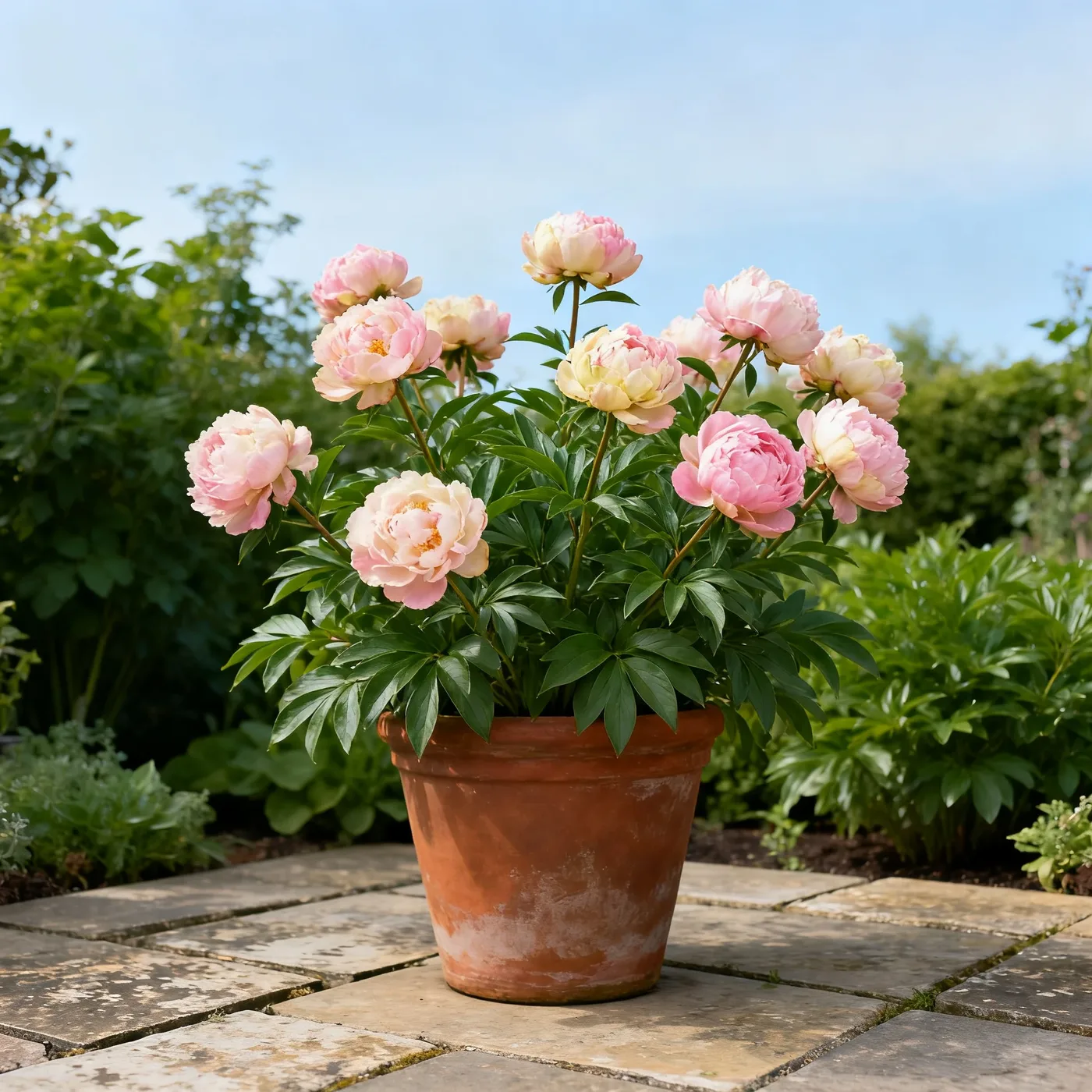
Sarah Bernhardt is a named cultivar with fragrant, rose-pink double flowers about 8 inches wide. A cultivar is one individual plant that has been multiplied by division for generations, so every Sarah Bernhardt in a garden is the same plant. A packet of seed with that name on it sells a promise that seed cannot keep.
What the Seller Leaves Out
The label usually names the parent and says nothing about the outcome. Missouri Extension notes that a vast majority of horticultural cultivars do not breed true from their own seed. The seed produces plants that may or may not carry the traits you wanted.
Ask the seller these questions before you pay:
- Was this seed collected from a Sarah Bernhardt plant, and who can say which plant was the pollen parent?
- Does the listing promise a flower color or form, or only a parent name?
- Does the listing state how many years a seedling takes to bloom?
- Would they sell you a division of the cultivar instead, and what would that cost you in waiting time?
Our Verdict on the Claim
A packet that promises pink double flowers is guessing. A packet that says "seed from a Sarah Bernhardt plant, results will vary" is honest, and that is the only kind worth buying. The most trustworthy source is a pod from a plant you already grow, since you know exactly where it came from.
Why Seedlings Will Not Match the Parent Plant
Every seed has two parents. The ovule belongs to the plant that made the pod, but the pollen can come from any peony a bee visited that week. The seedling gets a shuffled mix of both sets of genes, so it is a new plant, not a copy.
The resulting plants will be similar but not identical to the parent plant. Expect family resemblance. Do not expect the same flower.
What can change? Sarah Bernhardt is defined by its double form, its rose-pink color, its fragrance and a height of up to about 35 inches. A seedling can drift on any of those. It may come single, paler, darker, less scented, shorter or floppier. It may also come out lovely, just different.
That is the real appeal of seed, and it is a different goal from owning Sarah Bernhardt. Decide which goal you have before you start. If you want to grow the cultivar, seed is the wrong tool. If you want to see what a Sarah Bernhardt seedling turns into, it is a fine experiment.
The First Weeks of Warm and Cold Stratification
Peony seed does not sprout when you sow it and water it. It needs a warm period, then a cold period, and skipping either one leaves you with a pot of nothing.
Collecting or Sourcing Seed
One of the most common questions we get is whether you can plant a peony seed pod. You cannot plant the pod itself. Wait until it splits open on the plant, take out the seeds and discard the husk. Fresh seed from your own plant is better than a packet of unknown age, though we cannot give you a viability figure, so ask the seller how old the seed is.
Label everything from the first day. Write the parent plant, the date you collected or received the seed and the date each stage began. Over several years those notes are the only record you will have of what you did.
Steps for the Stratification Period
Germination is a two-part process, and the steps below follow it.
- Mix the seeds into slightly damp vermiculite or peat in a labeled zip bag. The medium should feel like a wrung-out sponge, not wet.
- Keep the bag warm, ideally between 70°F and 80°F, for about three months. Check it every week or two for mold and for fresh moisture.
- Watch for a small white root emerging from a seed. That root means the warm stage has worked.
- Move the bag to a cool place between 34°F and 50°F for 60 to 90 days. A refrigerator works well.
- Pot the seeds in a deep pot of loose, well-drained mix and set it outdoors where it will not dry out.
Do not rush step one. A seed pulled from warmth early often rots or stalls instead of rooting.
Does Sarah Bernhardt Peony Seed Really Need Two Winters?
You will read that peony seed needs two winters before a shoot appears. The claim is half right. Peonies require a double dormancy, also called two-step germination. The root breaks dormancy first, in the warm stage. The shoot stays dormant until it has had its cold stage.
Sarah Bernhardt is Paeonia lactiflora, a herbaceous peony, so it follows the pattern of its species. The root forms, then the shoot waits for a cold spell and appears the following spring.
Timing is the weak point in the claim. Some seedlings emerge the first spring after sowing, but others may require an additional year or more. So two winters is common, not guaranteed, and one winter does happen.
Our verdict is to plan for two and be pleased by one. Leave the pot where it is through a second winter before you decide anything went wrong. Customers usually ask us whether a pot with no green by midsummer is dead. Not necessarily. Scratch nothing, dig up nothing, and keep the pot lightly moist.
Year One: A Single Leaf and a Long Wait
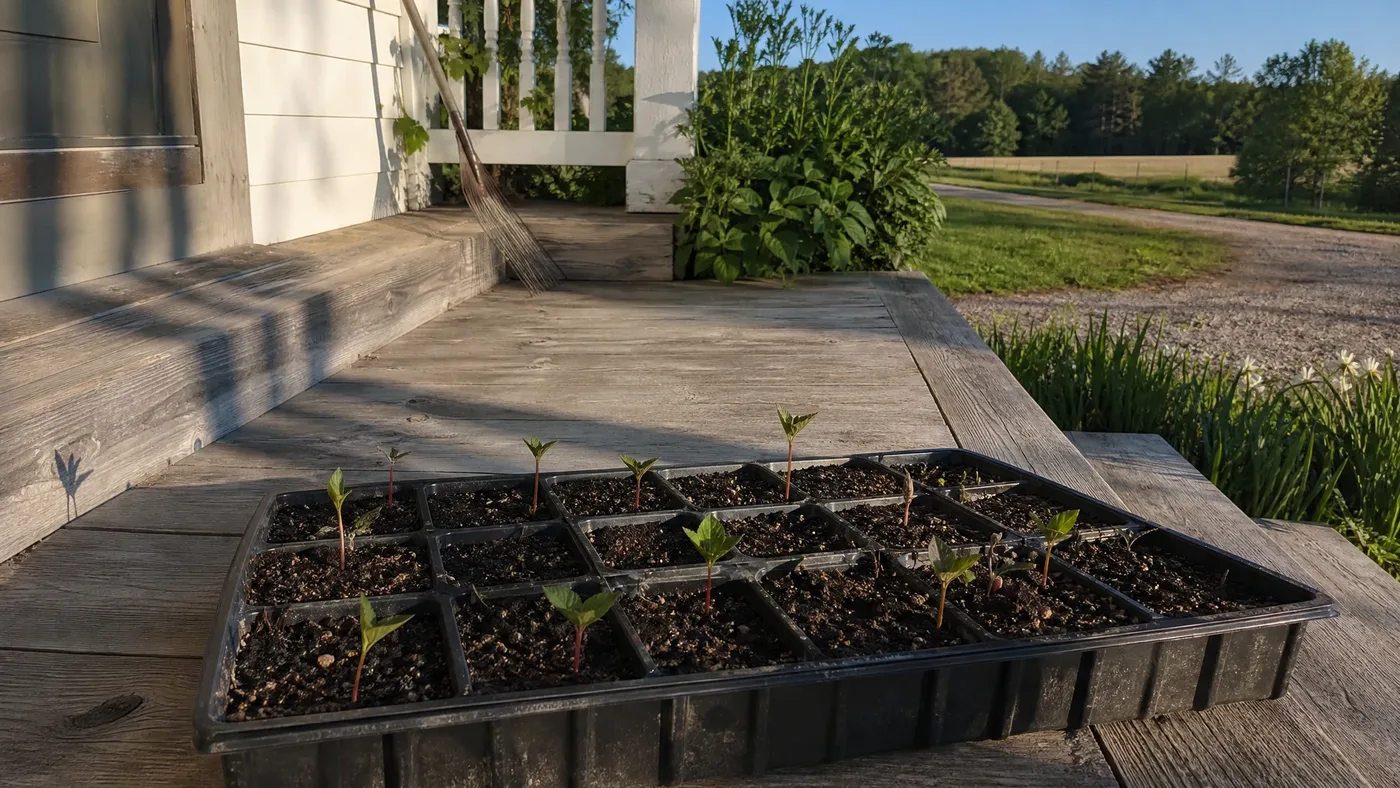
When a seedling does emerge, expect something underwhelming. You will see one reddish shoot or a small leaf, nothing like the 3-foot mound the cultivar becomes. The energy goes into the root, which is why the top stays so modest.
Keep the pot in full sun to partial shade, the range the cultivar accepts, and water when the top inch of mix dries. Do not feed it hard. A seedling this small does not need a rich diet, and a tiny plant in rich soil is easy to overdo.
In fall the leaf will yellow and fade. That is normal, and it is not a failure. Herbaceous peonies die back each winter, and a seedling follows the same rhythm from its first year. Leave the pot outdoors through that winter rather than carrying it inside, because the cold is part of the process.
Move it to the garden when the root has filled its pot. Our planting guide, how to plant Sarah Bernhardt peony for big spring blooms, covers site and depth, and the same depth rule applies to a seedling's buds. Give it a spot you will not need for a decade.
Years Two to Four Growing Sarah Bernhardt Peony Seedlings
Years two to four feel like nothing is happening. The clump adds a few more stems each spring, and the leaves get a little larger. Peonies are slow even when you buy a mature division. Utah State notes that peony plants take 3 to 5 years to establish and come into full production, and a seedling starts from far behind a division.
Modest Care That Works
Care stays simple. Water through dry spells, keep weeds off the crown, and mulch lightly without covering the buds. Plant it 3 to 4 feet from its neighbors, since the clump will eventually need that room. Our complete Sarah Bernhardt peony care guide covers the seasonal routine.
What Counts as Progress
Count stems, not flowers. A seedling that sends up three stems in year three and five in year four is on track. If a bud shows early, pinch it off in the first years so the plant keeps its strength. Hardy in zones 3 to 8, the cultivar's cold tolerance suits the seedlings, so winter itself is rarely the problem.
Judging the First Bloom on an Established Seedling
It typically takes five to seven years for seed-grown peonies to reach flowering size. Your first bloom could be well into the second half of that range. Late spring to early summer is when it will open, and each flowering lasts about two weeks.
When it opens, judge it against the cultivar honestly. A seedling can be beautiful and still not be Sarah Bernhardt. Use this table to compare.
| Trait | Sarah Bernhardt | How to check your seedling |
|---|---|---|
| Flower form | Fully double | Count whether the center is filled with petals or shows stamens |
| Color | Rose-pink | Compare against a true plant in bloom the same week |
| Size | About 8 inches across | Measure the open flower |
| Fragrance | Fragrant | Smell it in the morning on a warm day |
| Height | Up to about 35 inches | Measure in full flower, not in spring |
If it falls short, you have a new peony, and that is not a loss. Keep it, enjoy it, and do not label it Sarah Bernhardt. If no flower comes by year seven, check sun first. Our guide on why a Sarah Bernhardt peony is not blooming lists the usual causes, and shade is the first.
Sarah Bernhardt Peony From Seed Takes Patience, Not Skill
The work itself is easy: three months warm, two or three months cool, then waiting. The timeline is the difficulty, with a first shoot in one to two springs and flowers perhaps five to seven years after sowing. At the end you get an unknown pink, possibly lovely, possibly not.
If the true plant matters, take the sure route. A division carries the exact cultivar, as our guide to propagating Sarah Bernhardt peony by division explains, and buying a plant skips the seedling years. Our comparison of bare root versus potted plants helps you choose. Treat seed as a patient experiment, and treat a division as the guarantee.
Sarah Bernhardt Peony
Nursery-grown Sarah Bernhardt Peony in sizes from #2, shipped to your door.
From $74.56
Shop Now →Seed asks for patience, and we would rather you spend it watching a bloom than waiting on a sprout. We grow Sarah Bernhardt in full sun and well-drained soil, the conditions that let a young clump settle and flower. Every top-quality plant we ship comes from our own rows, and when you are ready to plant, we invite you to take a look at our shop.