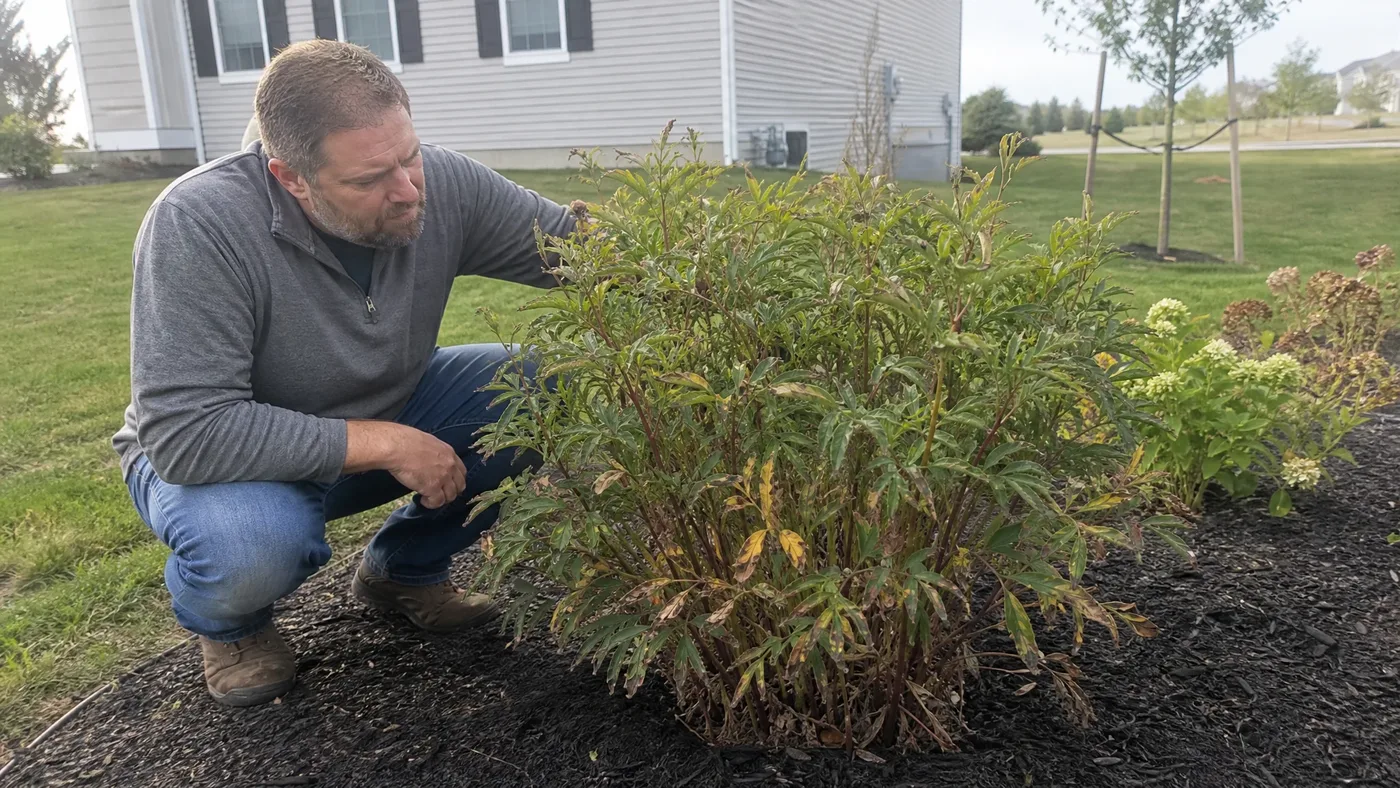
Why Are Sarah Bernhardt Peony Leaves Turning Brown?
We remember a late-July afternoon walking past a bed of Sarah Bernhardt and noticing that the leaf edges had gone the color of weak tea. The blooms had been gone for weeks, the plant stood a little under three feet, and nothing about it looked dead, only tired and a bit scorched.

Four quite different things turn this peony's leaves brown, and three of them are fixable while the fourth is simply the plant going to bed for winter. Guess wrong and you spray a healthy plant, or keep watering one that is already drowning.
We'll walk you through four yard situations, a hot side bed, a soggy low corner, a wet spring and a windy lot in September, then show you how to match your own yard to the right one and what to do about it.
The Narrow Side Bed Where Sarah Bernhardt Peony Baked
Picture a narrow bed along the south side of a house, with a brick wall on one side and a concrete walk on the other. The peony there leafs out beautifully in May and blooms on schedule, then by mid-July the leaf edges crisp and turn tan while the middle of each leaf stays green. The soil underneath is still damp an inch down.
That pattern is heat scorch. Brick and concrete soak up the day and throw it back at the plant, so the leaves lose water faster than the roots can send it up, and the edges give out first. The warmer your zone within the 3 to 8 range this peony grows in, the more a bed like this matters.
Confirm It Is Scorch First
Before you change anything, look for these three signs together.
- The browning is dry and papery along the edges and tips, with green tissue still in the middle of the leaf.
- The damage is worst on the side facing the wall or paving and lightest on the side that gets the most air.
- The soil a couple of inches down is moist and the stems are firm when you squeeze them near the base.
If the stems are soft or the browning started at the lowest leaves, skip ahead to the low corner instead.
Cool the Bed Without Losing the Sun
Sarah Bernhardt still needs at least six hours of direct sunlight a day for good bloom, so don't answer scorch by dragging the plant into deep shade. Give it relief from the hottest hours only. A length of shade cloth on the wall side during the worst weeks works, and so does a taller neighbor that throws afternoon shade across the roots.
Water deeply at the base in the morning rather than sprinkling a little every day. Then lay a thin mulch over the root zone and keep it pulled back from the crown, so the stems are not sitting in a warm, damp collar.
Crowding makes a hot bed hotter. Extension sources put peony spacing at 3 to 4 feet, and a narrow bed often squeezes plants well inside that. If yours are tighter, plan to divide or move one this fall so air can move between them.
Leave the scorched leaves alone unless they bother you. The plant is still feeding its roots through whatever green remains, and next May's flowers are paid for in the weeks after this year's bloom.
The Low Corner Where Water Sat
Now picture the opposite yard, a low corner where the downspout empties and the lawn stays soft for days after rain. The peony there looks fine in May, but by early summer the lower leaves yellow and then brown, and a stem or two wilts on a day that is not even hot. You water it more, assuming it is thirsty, and that makes things worse.
Overwatering browns a peony from the bottom up and from the inside out, where scorch starts at the edges. Wet roots cannot breathe, so the plant behaves as if it were in drought even though the soil is soaked. Iowa State's extension ties Phytophthora blight, a rot disease, to poorly drained soils, and a low corner is where we usually see it begin.
Test the Soil and the Crown
Push a trowel in a few inches beside the plant. If the soil is soggy or smells sour, you have your answer. Then scrape the soil back gently from the top of the crown. Firm, pale roots mean the plant is sound, and dark, mushy tissue means you have rot to deal with.
One of the most common things we hear is that a peony in a spot like this was fine for two summers and then suddenly declined. A young plant has few roots to lose, and a wet year is usually what tips it over.
Fix the Drainage, Not the Schedule
Stop watering until the top few inches dry out, then water only when they do. Our watering guide walks through how much a settled plant actually needs. If the corner holds water after every rain, though, no schedule will save the plant, so the soil has to change.
Sarah Bernhardt is not fussy about soil type, and peonies tolerate clay soils too, but they want that clay to drain. Mound loamy soil into a raised bed, or lift the plant in fall and move it to higher ground. Our guide to soil and drainage for Sarah Bernhardt covers how to test a spot before you plant. If the crown is mushy in places, cut those parts away to firm tissue before replanting.
Damp Spring, Gray Mold on Sarah Bernhardt Peony Leaves
After a cold, rainy April and May, the new shoots come up well and then something goes wrong. Stems blacken at the base, a bud turns brown and never opens, and leaves pick up big dark patches. Pull on a damaged leaf and you may find gray fuzz. Sarah Bernhardt's heavy double blooms hold rain like a sponge, which gives botrytis exactly the damp it wants.
The fungus attacks stems, leaves and flower buds and is most common in cool, rainy weather. Iowa State describes the leaf damage as large, irregularly shaped dark brown spots, which is different from the dry edge scorch of a hot bed.
Tell Botrytis From Its Look-Alikes
Peony leaf blotch is the usual confusion. The Illinois extension describes purplish-brown spots on the upper leaf surface and chocolate-brown tissue underneath, and it tends to show up later in summer than botrytis. If the spots on your plant are black rather than brown, our guide to black spots on Sarah Bernhardt leaves will sort that out. For the wider picture of what else attacks this plant, see our roundup of common pests and diseases.
Treat It Step by Step
Work through these on a dry day, and do them as soon as you spot the first damaged shoot.
- Cut off every affected stem, leaf and bud with clean pruners, going back to healthy tissue or to the ground if the stem is blackened at the base.
- Bag the cuttings and throw them out. Do not compost them, because botrytis fungi survive in garden debris over winter.
- Rake fallen leaves and old mulch away from the crown so spores have nowhere to sit.
- Water at soil level in the morning. The Illinois extension says to avoid overhead watering, because splashing spreads spores and long leaf wetness increases disease.
- Thin crowded neighbors so air can move through the clump. Peonies in too much shade also have more foliar disease than those in full sun.
If the problem comes back every wet spring, ask your local extension service which fungicide is labeled for peonies where you live and when to apply it. Sprays help most as a backup to the cleanup, not a replacement for it.
September Brown on a Windy Corner Lot
On an exposed corner lot, wind works on a peony all summer. By September the foliage looks ragged, bronze and brown, stems lean over, and a few leaves have blown away entirely. Many owners assume the plant is dying, and many reach for the pruners or the hose in a panic. In most cases the plant is doing what herbaceous peonies do.
Sarah Bernhardt dies back to the ground every year, and the roots and buds carry on underground. That is true all through its zone 3 to 8 range. Wind simply makes the show look worse, because it dries and tears leaves that would otherwise fade gently.
Normal Dieback or a Real Problem?
Normal dieback browns the whole plant fairly evenly, late in the season, as nights cool. The stems stay firm, and the leaves are dry and crumpled without spots, fuzz or a mushy base. Wind damage looks like torn or frayed edges with the same dry, tan tissue. If the browning arrived in June or July, or came with blotches or soft stems, go back to the earlier situations.
When to Cut Back
Wait until the foliage has browned and collapsed on its own, because green leaves are still feeding the roots. Then cut the stalks off at ground level and remove the debris from the garden. Destroy it, since disease fungi overwinter in what you leave behind. Our pruning and cutting back guide covers the details.
Timing depends on your climate. In colder zones the foliage may brown after the first hard frosts, and farther south it can hang on well into fall. If the plant had botrytis this year, cut it as soon as the leaves brown rather than leaving old stems standing.
Calm the Wind Next Year
Tall, top-heavy double blooms catch wind like sails. Put a ring support around the clump in early spring, before the stems fill in, and consider a low fence or a shrub on the windward side. A sheltered plant keeps its leaves intact longer, so it ages more gracefully into fall.
Reading Your Own Yard Against These Four
Browning looks much the same from a kitchen window, so use the clues in the table to decide which situation you are really in.
| What you see | Most likely cause | First move |
|---|---|---|
| Dry, tan edges with green centers in July, worst beside a wall or paving | Heat scorch | Water deeply at the base in the morning, add afternoon relief, mulch away from the crown |
| Lower leaves yellow then brown, soft dark stems, soggy soil | Overwatering or poor drainage | Stop watering, check the crown, raise or move the plant |
| Large dark brown blotches, brown buds or gray fuzz after cool, rainy weather | Botrytis | Cut out and bag damaged growth, water at soil level, thin the planting |
| Whole plant browns evenly in September with no spots | Normal fall dieback | Wait for full browning, then cut at ground level |
Start with the month. Browning in July points to heat or water, browning after a wet spring points to botrytis, and browning in September points to dieback. Then check the soil with a trowel, and last look closely at the leaf itself for spots, fuzz or dry edges.
Customers usually ask us whether to spray first. We tell them to read the calendar and the soil first, because a fungicide does nothing for a plant sitting in water or one that is simply finished for the year.
Two causes can overlap, a hot bed that is also crowded, or a low corner that stays wet in a rainy spring. Fix the site problem first and the plant usually sorts out the rest. Young plants also show stress more easily, and extension sources say peonies take 3 to 5 years to establish, so be patient with a newcomer.
Brown Leaves Seldom Mean Losing Your Sarah Bernhardt Peony
Most browning on this peony is either normal or fixable. This week, walk the bed and note which month it started and where on the plant. Push a trowel into the soil, cut out any blotched or fuzzy growth and bag it, and move the hose to the base of the plant in the morning. If it is September and the whole plant is fading evenly, leave it alone until it finishes.
Walk out to the same bed in October and you will find the leaves browned and cut back, the stalks gone to the compost bin's cousin, the trash, and the ground looking bare and quiet. The roots are resting fine below, and come spring those red shoots will push up again, as they have for decades in cottage gardens.
Sarah Bernhardt Peony
Nursery-grown Sarah Bernhardt Peony in sizes from #2, shipped to your door.
From $74.56
Shop Now →Full sun and well-drained soil are what we give Sarah Bernhardt on our farms, the same setting this guide keeps pointing you toward. We grow and sell top-quality plants from those farms, so each one you buy has been raised by us. If your peony needs a fresh start after the brown leaves, begin with one of ours.